





Washington is ramping up economic pressure on Tehran, with the U.S. Navy’s blockade not allowing ships to enter or leave the Persian Gulf while its destroyers shepherd ships through the Strait of Hormuz shipping lane, which President Donald Trump has declared “U.S. territory.”
That vise will tighten further, the president vowed in an Aug. 19 Truth Social post, with a new raft of sanctions that will impose “TREMENDOUS Economic Consequences” on nations providing “any lifeline to Iran,” declaring an “ECONOMIC D-DAY” awaits Tehran.
The blockade appears to be working. The International Monetary Fund expects Iran’s already sanction-strapped economy to contract by more than 5 percent in 2026, with inflation skyrocketing to 80 percent since the United States and Israel launched their war against Tehran on Feb. 28. Its oil export revenues have shriveled, and production is restrained because, without the ability to ship, it is running out of storage capacity.
Meanwhile, traffic is moving through the Omani, or western, side of the 104-mile long, 24-mile wide strait, although how much is debatable since many carriers—mostly Saudi, UAE, Kuwait state-owned or uninsured Greek-owned “bunkers”—are making the run in “dark transits,” with transponders off, and transferring freight to tankers in the Arabian Sea under the protection of a 20-ship U.S. Navy battle group led by an aircraft carrier.
Since early March, when the U.S. Navy began its escort operation, the Belgium-based maritime tracker Kpler estimates about 300 ships, mostly VLCCs (Very Large Crude Carriers) that can each haul up to 2 million barrels of crude, have made more than 1,510 “dark transits” in-and-out of Persian Gulf via the strait, a pace accelerating since mid-July.
But if there is a regime that can withstand pressure, it’s the Islamic Republic, which has endured U.S.-led sanctions and restricted access to global markets since 1979. Iran has demonstrated it can endure economic hardship and, since March, proven it can inflict pain on global commerce by menacing strait shipping—and its Gulf neighbors—with drone and missile strikes.
Related Stories
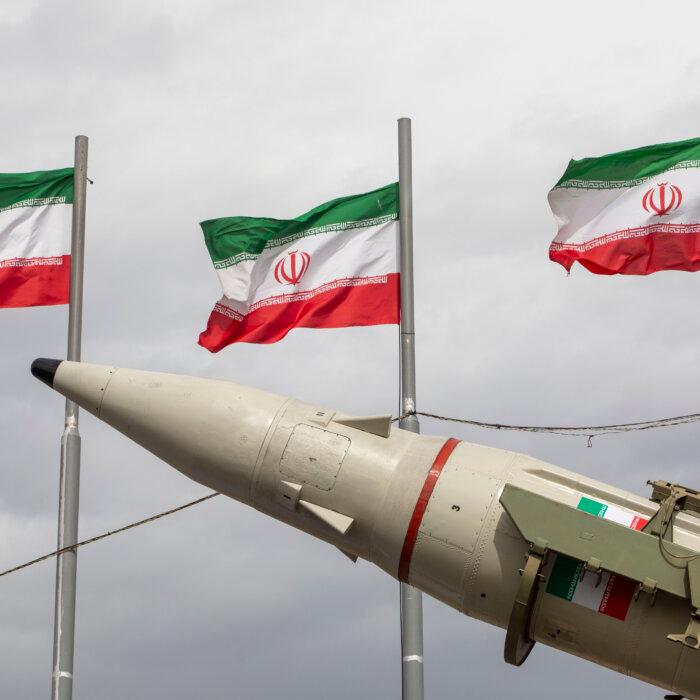

The bottom line is that while the United States’ strangulation strategy is applying economic pressure on Iran, with the national average for gas topping $4 a gallon and November’s midterms less than 75 days away, Tehran believes political pressure will force concessions from Washington and gain Tehran international recognition that it, at least partially, “controls” the strait.
“It seems military escalation has, at least for now, been dialed down a little bit, and arguably that’s to do with the U.S. calculation of midterms and not wanting to escalate things unduly,” Lloyd’s List editor-in-chief Richard Meade said during an Aug. 20 briefing. “From Iran’s position, I get the distinct impression their calculus is around timing and believing that time is on its side.”
“That’s a very fair assessment,” said Dina Arakji, a Middle East Institute fellow and analyst with London-based Control Risks, a strategic consulting firm.
“U.S. appetite for a significant military escalation at the level of March, April is unlikely, and that’s what appears to be Tehran’s calculus,” she continued. “Through its demands and its continuing hardening of position, it is trying to leverage its position through negotiation because, fundamentally, what Iran wants is long-term authority over the [strait] trade and the financial returns that can come with that.”

Arleigh Burke-class guided-missile destroyer USS Rafael Peralta (DDG 115) enforces a maritime blockade against an Iranian-flagged ship attempting to sail toward an Iranian port, April 24, 2026. U.S. Navy photo
Flipping the Time Table
Meanwhile, the Trump administration appears to be positioning itself to play a longer game, Lloyd’s List Maritime Intelligence director Bridget Diakun and Lloyd’s List Asia Pacific editor Cichen Shen said during the weekly update.
“The U.S. and Iran continue to view each other through a lens of deep mistrust, and also their strategic objectives remain very far apart, and neither side appears to be willing to make concessions,” Diakun said, adding “an off-ramp is unlikely anytime soon.”
A big player in pressuring Iran—and the United States—into a resolution could be China, Shen said. China is dependent on Gulf crude. It has been tapping its strategic petroleum reserves, estimated near 1.4 billion barrels six months ago, with its state-backed Cosco shipping company and China Merchants Group “at least for now, very cautious about” traversing the strait, he said, especially with Chinese leader Xi Jinping set to meet with Trump in Washington on Sept. 24.
“Beijing has been sort of absorbing its oil reserve,” so “the focus here for a lot of the tanker and refinery players,” the Singapore-based Shen said speaking from Shanghai, “is, when is China going to import again? The (global) oil price has managed to be stable overall. A big reason is China has … stopped buying to a large extent. So, the question is, will China resume importing a large amount of crude oil again?”
That question will be on the table when Xi and Trump meet. “If they do want to send their ships back to the Strait of Hormuz, the likelihood is they will go through the Iran-approved corridor, and if they do that, then it will involve negotiation with the U.S.,” Shen said. “That is something people here are keeping a close eye on.”
But the United States has a fist up its sleeve that could ameliorate, if not totally alleviate, supply pressures—the U.S. Navy, with a half-century of sustained experience on GONZO (Gulf of Oman Naval Zone of Operations) Station.
Before Feb. 28, more than 130 vessels a day passed through the strait, exporting an average of 20 million barrels of crude daily. Up to 15 million barrels a day are flowing out of the Gulf each day now, U.S. Energy Secretary Chris Wright maintains.
The ships are transiting the United Nations’-authorized western route escorted by U.S. Navy destroyers, skirting the Omani coast and avoiding the eastern route that Tehran has declared the “Iranian Unilateral Scheme,” with plans to issue permits and charge a 5-to-7 percent per barrel fee.
If that much crude is leaving the Gulf, that means time is on the United States’ side in applying pressure on Tehran.
The problem is, the volume of shipping is difficult to assess since the vast majority are “dark transits,” and Wright’s claim of 15 million barrels a day of crude leaving the Gulf, so far, is not showing up in refineries.
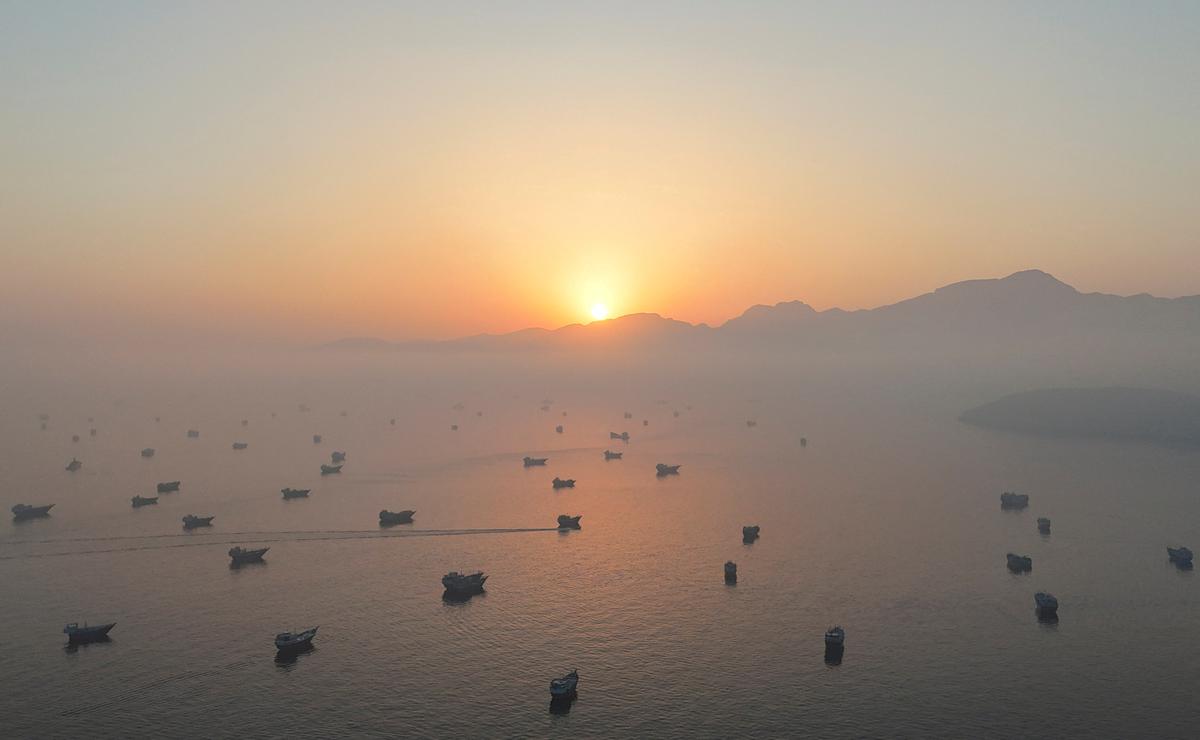
A drone view shows vessels in the Strait of Hormuz, as seen from Musandam, Oman, on June 15, 2026. STR/Reuters
Uncertainty on the Water
Analysts at the Lloyd’s List briefing and at an Aug. 21 Center for Strategic & International Studies ‘Energy Shots’ discussion with the center’s energy security director, Joseph Majkut, and ClearView Energy Partners managing partner, Kevin Book, all agreed that time will tell how well the U.S. Navy’s escort operation can work in getting crude through the strait.
“There’s a high degree of uncertainty as to what’s happening,” Majkut said. “Of course, if the Navy is actually running 10 or 12 or 15 tankers out of the strait every night under the cover of darkness with transponders off, you think they would be able to keep pretty good track of those barrels” once they turn transponders back on.
But there’s been no market response to 15 million barrels a day leaving the Gulf, he said, with ship-trackers “seeing 4 to 5 million barrels a day, some may say 7 million barrels a day” arriving in ports. “Commercial estimates are half what the administration believes is happening,” he said.
The White House maintains “more than 20 ships were slated to move in-and-out of the strait through the [Omani] lane” a day, Majkut said. “To be generous, I think ‘and’ might be doing a lot of work because if you have 10 ships coming into the strait to pick up oil and bring it back out, then you can kind of add to 20. In that case, the ‘and’ might be doing quite a bit of work.”
But as Meade, Arakji, and Diakun acknowledged in London the day before, since most of this traffic is “dark,” it may take weeks to estimate the actual volume, and there may never be a clear assessment of where the crude is going. In fact, much of it may be oil on the water being carried by shadow fleet tankers. As many as 50 of the 300 ships that have made multiple transits since March are suspected to be Iranian, which has an estimated 80 million barrels of oil on the water.
Majkut said despite the lack of information, the Navy’s establishment of a “U.S. territory” in the strait “really might be settling in and helping to restore commercial traffic” that global shippers will use rather than the Iranian permit-and-fee scheme.
There’s “more than a little debate” about the veracity of Wright’s claim, Book said, but it “doesn’t strain my credulity to think that satellites squinting from space probably aren’t as able to see what’s going on in the strait, the barrels on the water that the U.S. military is escorting and that the secretary is privy to.”
Those “barrels on the water” may be the target of Trump’s sanctions, he says, which promises to apply economic consequences on nations providing “any lifeline to Iran,” Meade said.
“It’s probably raising a few eyebrows in Malaysia as well as Beijing,” he said, “given that [Malaysia] remains the primary ship-to-ship blending hub for Iranian crude. If I was sitting in Malaysia, I would be worried about this.”
Time will tell, Majkut said.
“We’re going to hear more on Monday [Aug. 24] about this new package of economic sanctions, but it’s becoming a contest of who can tolerate risk and accumulating costs longer,” he said. “The global economy and the U.S., which feels a responsibility for that? Or an Iranian regime which is increasingly cut off but feels emboldened and empowered?
“And then, of course,” Majkut added, “there’s a question of, if we are able to secure flows through the strait, returning to the promise that the U.S. has had for the Gulf for the last 50 years, what is the cost of doing that? What are the naval assets and other military assets necessary? And how long is the U.S. going to be willing to do that? And who’s paying for it?”