





Four months after cervical fusion surgery, a man still could not lift his left hand to touch his head. His left shoulder remained painful, sore, and tight despite electrotherapy and other supportive treatments.
Dr. Toddy Wu, who specializes in spinal needle-knife therapy, attributed the restricted movement to suspected adhesions in the deep muscles supporting the cervical spine. After Wu treated several areas with needle-knife therapy, also known as acupotomy, the patient was immediately able to raise his arm.
The case illustrates an important point: When pain persists after spinal surgery, the operated structure may be only one part of the picture. The surrounding muscles, fascia, nerves, and movement patterns may also need to be evaluated.
Why Pain May Continue After Surgery
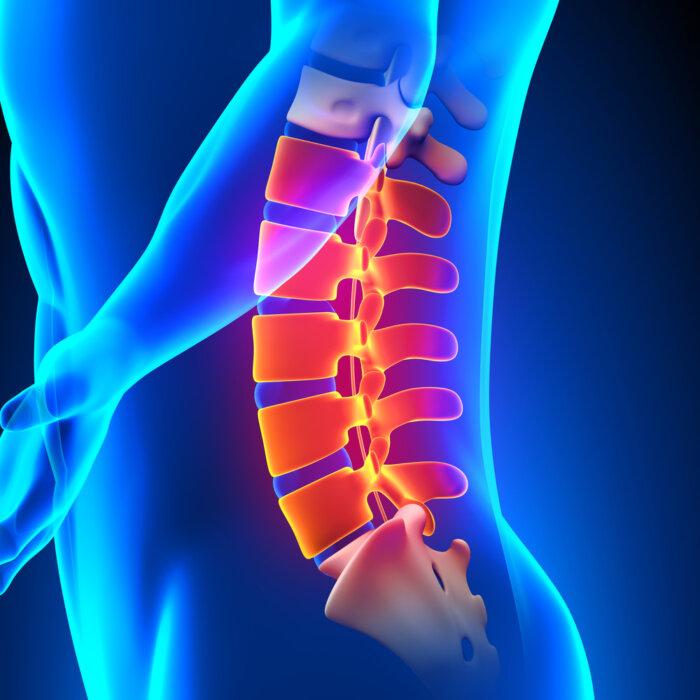
The patient had undergone fusion involving the C5–C7 region for herniated discs, foraminal narrowing, and nerve-root compression. Surgery addressed the structural problems that had been pressing on the nerves, but recovery after spinal fusion takes time. The bone itself may require six to 12 months to fuse fully, and activity is usually increased gradually under medical guidance.
Lingering symptoms do not necessarily mean that surgery failed. During recovery, pain or limited movement may also be influenced by residual nerve irritation, muscle guarding, weakness, altered movement patterns, or problems in the shoulder and surrounding soft tissues.
Related Stories

At the same time, persistent or worsening symptoms should not automatically be attributed to tight muscles or adhesions. New weakness, numbness, balance problems, fever, wound changes, or increasing pain require prompt assessment by the surgeon or another qualified clinician.
Imaging Is Only Part of the Assessment
Wu compared spinal imaging to the visible portion of an iceberg: It provides valuable information, but may not explain every source of pain.
X-rays are useful for examining bones, alignment, and surgical hardware, while MRI can show discs, nerves, the spinal cord, and many surrounding soft tissues. However, a scan is a static image. It cannot fully show how smoothly a person moves, which muscles are guarding, whether the shoulder is contributing to the problem, or how strongly symptoms correspond to an imaging finding.
For this reason, imaging is most useful when interpreted alongside a physical examination that assesses strength, sensation, reflexes, tenderness, and range of motion.
In the patient’s case, Wu used palpation and movement testing to identify what he considered areas of soft-tissue restriction in the deep supporting muscles of the neck. These restrictions, he said, appeared to limit the patient’s ability to raise his arm.
What Is Needle-Knife Therapy?
Needle-knife therapy, or acupotomy, uses a slender instrument with a small blade-like tip. It is inserted through the skin to release selected areas of tight or restricted soft tissue.
Unlike conventional acupuncture, which uses fine needles to stimulate specific points, acupotomy is intended to mechanically release tissue. Because the instrument can reach deep structures, especially around the spine, treatment requires detailed anatomical knowledge and careful avoidance of nerves and blood vessels.
Wu said that a broad area of tightness does not necessarily require extensive cutting. Treating a few carefully selected points may be enough to reduce abnormal tension and allow movement to improve.
Research on acupotomy remains limited. A systematic review of 10 trials suggested that it may reduce pain in people with chronic nonspecific neck pain.
Acupotomy should be considered a specialized procedure rather than a routine solution for postoperative pain. Anyone recovering from spinal surgery should consult the surgeon before undergoing needling or other invasive treatment near the surgical area.
Restoring Movement After the Spine Has Healed
Once a patient has been cleared to exercise, gentle movement may help reduce stiffness and rebuild coordination. Wu recommends choosing movements that feel controlled and allow the spine and shoulders to move more smoothly afterward.
The following movements are general mobility exercises suggested by Wu. Please stop if an exercise causes sharp pain, radiating pain, numbness, weakness, dizziness, or worsening symptoms.
1. Cat-Cow
This gentle mobility exercise helps improve spinal flexibility and ease stiffness throughout the back and neck.
Step 1: Start on all fours—palms and knees on the ground, positioned directly under your shoulders and hips, with your back kept straight.
Step 2: Inhale, let your abdomen sink, open your chest, and slowly lift your head. Look forward or slightly upward, feeling a stretch through your abdomen and chest.
Step 3: Exhale, round your back upward, tuck your chin toward your chest, and look toward your navel. Feel the stretch along your back.
2. Puppy Pose to Mermaid Stretch
This flowing stretch opens the chest, shoulders, and spine while promoting mobility through the back.
Step 1: Start on all fours—palms and knees on the ground, positioned directly under your shoulders and hips, with your back kept straight.
Step 2: Keep your hips still and slowly extend your arms forward, gently lowering your chest, armpits, and chin toward the floor to stretch your back. Hold for a few seconds.
Step 3: Lower your body forward until you’re fully prone. Then press your hands into the floor to lift your upper body, raising your head and looking upward. Hold for a few seconds.
Step 4: Slowly push your hips backward with your hands, returning to the Step 2 position, and repeat the movement back and forth.
3. Knee Hug Stretch
This simple stretch helps relax the lower back and relieve tension that can build up overnight or after prolonged sitting.
Step 1: Lie on your back with both legs extended.
Step 2: Bend one or both knees and gently lift them toward your chest. Use your hands to hug your knees and pull them closer to your body. Hold for a few seconds, then slowly release and lower your legs back down.
Spinal surgery can correct compression, instability, or other structural problems, but the operation is not the end of recovery. Healing also involves restoring strength, mobility, coordination, and confidence in movement.
When pain continues, the goal should not be to assume that every symptom comes from the scan—or that every symptom comes from the soft tissues. A careful assessment of both structure and function offers the clearest path toward identifying the cause and choosing the safest treatment