





Coalition avenir Québec Leader Christine Fréchette walks to speak to reporters while at the Fédération Québécoise des Municipalités (FQM) in Quebec City on Sept. 25, 2026. The Canadian Press/Jacques Boissinot
Quebec residents headed to advance polling stations on Sept. 27 as five major parties vie for seats in the Oct. 5 general election.
Candidates from Coalition avenir Québec (CAQ), Parti Québécois (PQ), the Quebec Liberal Party (PLQ), the Conservative Party of Quebec (PCQ), and Québec solidaire (QS) are competing for 127 seats in the National Assembly of Quebec.
The latest provincial poll on voter intention, fielded by Léger online from Sept. 18 to 21 among 1,001 eligible Quebec respondents and published Sept. 22, shows Parti Québécois leading at 29 percent. The Quebec Liberal Party follows at 23 percent, the CAQ at 20 percent, the Conservative Party of Quebec at 17 percent, and Québec solidaire at 10 percent.
Incumbent Quebec Premier Christine Fréchette of the CAQ is leading her party’s provincewide campaign while running for election in the riding of Trois-Rivières (having previously represented Sanguinet). Her platform focuses on addressing the cost of living, improving public services, and investing in infrastructure through the $180 billion Plan québécois des infrastructures, while maintaining a trajectory toward a balanced budget by fiscal year 2029–30.
Fréchette appealed to Prime Minister Mark Carney in a Sept. 17 social media post calling for a “special status” for Quebec in Canada’s proposed associate membership with the European Union.
Parti Québécois Leader Paul St-Pierre Plamondon, running in the riding of Camille-Laurin (formerly Bourget), highlights on his campaign page issues such as public spending, the housing crisis, cost of living, the protection of the French language, and homelessness. The party also maintains a dedicated section on its website titled “Independence,“ declaring, ”Quebec is a great nation. By taking our destiny into our own hands, we will finally be able to make our own decisions and reach our full potential.”
Related Stories

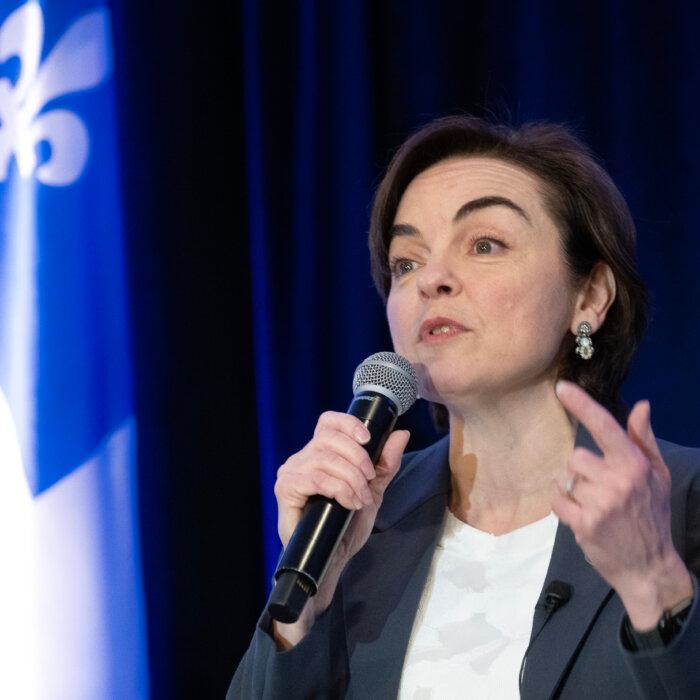
Quebec Liberal Party Leader Charles Milliard, running in Orford, focuses his campaign on housing affordability and construction, economic support for small and medium-sized businesses, health-care access, education, and youth supports—including modernizing student financial aid, funding public-sector internships, and reinforcing core learning—and support for Quebec culture and the French language.
Conservative Party of Quebec Leader Éric Duhaime, running in Bellechasse, is campaigning on tax cuts, deregulation, and reduced government spending, including proposals to eliminate the provincial sales tax on used goods, abolish the carbon tax, and suspend gasoline taxes. The party also advocates for greater private-sector involvement in health care, natural resource development, regional autonomy, and increased autonomy for Quebec within Canada, along with specific measures on immigration, housing, education, families, and seniors.
Québec solidaire Leader Ruba Ghazal, running in Mercier, is campaigning on a platform focused on affordability, expanded public services, and wealth redistribution, including rent caps tied to inflation, a public grocery store network to lower food costs, improved public transit, and investments in public schools. The party proposes a tax on high-net-worth households (over $25 million) to fund public services; measures to drive the ecological transition, by investing heavily in public transit in particular; and ultimately Quebec independence.
The party is led by two individuals whom it refers to as spokespersons rather than leaders—one female, Ghazal, and one male, Sol Zanetti. Ghazal has been selected to become premier if Québec solidaire wins the election and forms government.
This year, a rule governing the use of languages other than French at Quebec polling stations fully took effect, requiring election staff to communicate with voters in French unless a recognized exception applies. The rule does not restrict what language voters may speak. Staff may use another language to determine whether a voter qualifies for an exception, such as being indigenous or eligible for English-language education.
The rule stems from Bill 96, enacted in 2022, which tightened Quebec’s language laws and established limited exceptions. After transition periods for government bodies expired, Élections Québec’s directive fully took effect for the current election cycle.
The Canadian Press contributed to this report.
We had a problem loading this article. Please enable javascript or use a different browser. If the issue persists, please visit our help center.