





Photos of Arnold and Joanne De Jong are seen outside the Abbotsford, B.C., law courts on May 8, 2026, after a judge’s guilty verdict against three men for their murder in May 2022. The Canadian Press/Darryl Greer
A British Columbia Supreme Court judge says a section of the Criminal Code restricting multiple murderers from applying for early parole under the so-called “faint-hope” clause is unconstitutional.
Justice Brenda Brown ruled on Monday that the section of the code prescribing 25 years of parole ineligibility infringes upon the Charter of Rights and Freedoms’ guarantees against cruel and unusual punishment.
Her decision has delayed sentencing again for Abhijeet Singh, Gurkaran Singh and Khushveer Toor, who were found guilty of first-degree murder in May for the home-invasion killings of Arnold and Joanne De Jong.
The De Jong family said outside court that they were frustrated and disappointed sentencing had been delayed again by the decision, believing the killers would be hear their ultimate sentence more than four years after the slayings.
“It doesn’t change the fact that this has gone on for many, many years and it’s time we come to the conclusion and it just makes me more and more disappointed in our justice system and how it operates,” said Helen Leusink, Joanne De Jong’s sister, outside the courthouse.
The trial heard that 77-year-old Arnold De Jong died by asphyxiation, with his entire head and face wrapped in duct tape, while 76-year-old Joanne De Jong was bludgeoned and had her throat slashed.
Related Stories
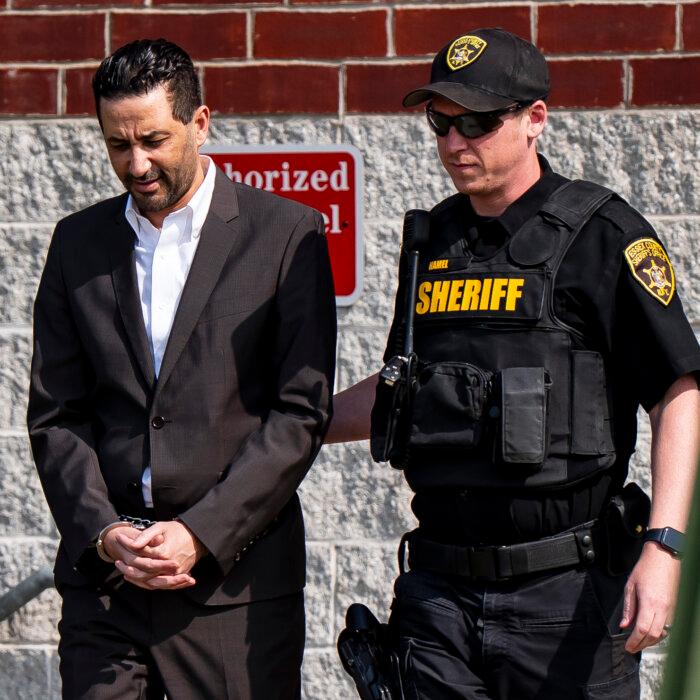

A first-degree murder conviction would normally bring a life sentence without chance of parole for 25 years, but lawyers for the trio wanted their clients to be able to ask for the right for early parole, through the faint-hope clause in the Criminal Code.
The section of the code ruled unconstitutional by Brown seeks to exclude multiple murderers from the faint-hope clause allowing some other criminals to seek judicial review of their parole ineligibility period once they have served more than 15 years.
The judge did not give reasons for the decision on Monday, but lawyers will be back in court for another argument that will involve whether the infringement can be justified under Section 1 of the Charter.
Further arguments in the case have now been scheduled for November, and the sentencing of the men now set for February 2027.
The federal government under former prime minister Stephen Harper abolished the faint hope rule for multiple murderers sentenced after December 2011.