





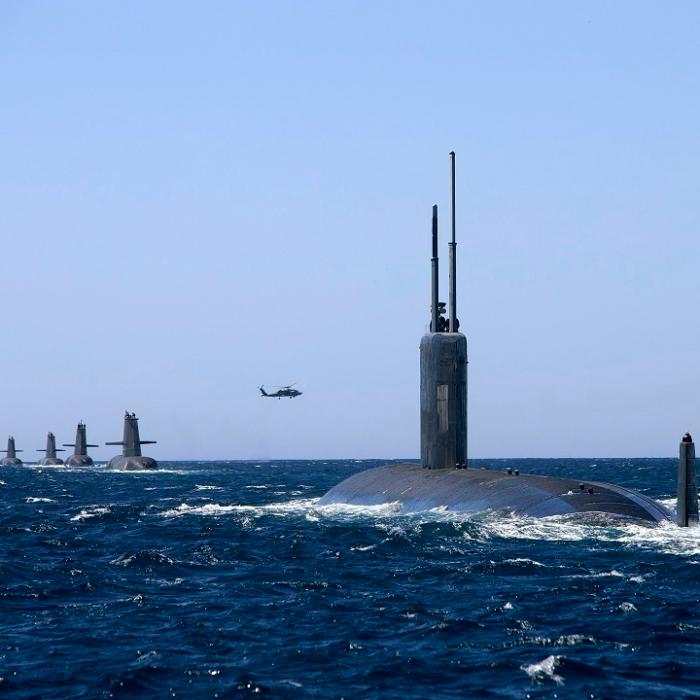
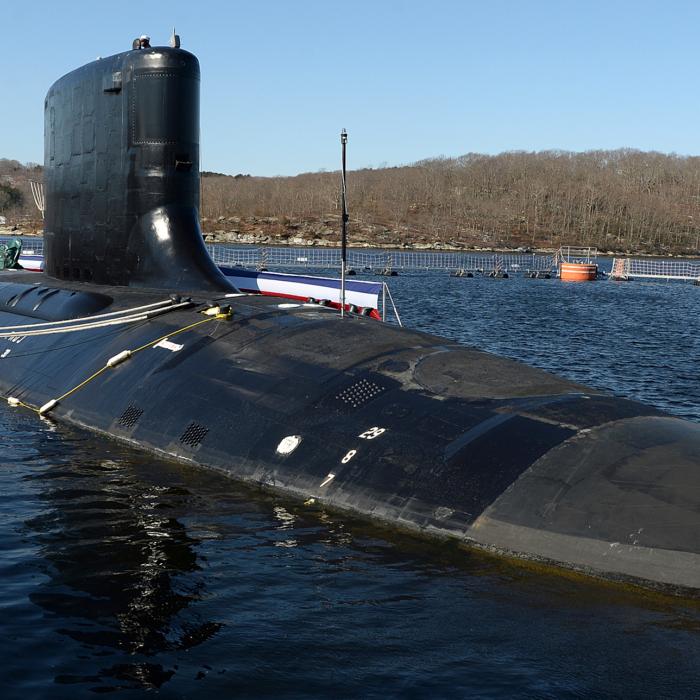
USS Colorado (SSN 788) arrived at HMAS Stirling, Australia on Oct. 29, 2026, for scheduled maintenance, bringing U.S. and Australian personnel together to expand allied submarine sustainment capabilities ahead of Submarine Rotational Force – West in 2027. Courtesy of the U.S. Navy
Radioactive waste from American and British nuclear-powered submarines will be stored at a navy base near Perth from late 2027, but Defence officials have yet to identify or assess a permanent disposal site.
Australian Submarine Agency officials told a Senate estimates hearing on Oct. 29 that waste generated during maintenance on visiting submarines would be held temporarily at HMAS Stirling, a navy base on Garden Island, south of Perth.
The agency’s deputy director-general for technical matters, Tim Hodgson, said the waste would include items such as rags, filters and tools.
Hodgson said the waste would remain at Stirling until it was moved to another interim storage facility or a final disposal site.
But under questioning from Greens Senator David Shoebridge, he confirmed a final location had not been chosen.
Related Stories
Asked whether any sites had been identified or scoped out, Hodgson answered “No” to both questions.
Hodgson said the agency was getting advice from the Australian Radioactive Waste Agency, which oversees the management of radioactive waste from sources including hospitals, universities, mining, and the Lucas Heights nuclear reactor in Sydney.
Australia Will Pay For Storage
Agency officials said they expected to obtain the necessary license to handle the radioactive waste by then.
“No, no, that is not the plan, Senator. That was never agreed to,” said agency head Vice Admiral Jonathan Mead.
The agency’s head of infrastructure, Josh Watkin, said a contractor to build a permanent waste-handling facility at Stirling would be appointed in the coming months, with construction expected to take about two years.
Officials took the facility’s estimated total cost on notice.
Payman also asked whether Australian taxpayers could end up paying for a facility used only by American and British submarines if Australia never received its own nuclear-powered fleet.
Hodgson said that scenario was hypothetical, and that the agency was planning for Australia’s future submarine requirements.
The planned facility at Stirling would provide waste handling and storage, rather than serve as a final disposal site.
Meanwhile, the USS Colorado, which is undergoing maintenance at Stirling, will take its waste back to the United States, as visiting American submarines have done in the past.
No Say on Spending
While officials confirmed that a dedicated Pentagon office provides progress reports on how Australian funds are allocated, Australian Submarine Agency’s Head of Policy, Mikaela James, took on notice a question regarding whether Australia exercises any formal veto power over specific spending allocations.
Officials said that U.S. federal law did explicitly prohibits Australian funds from being directed towards nuclear weapons programmes.