





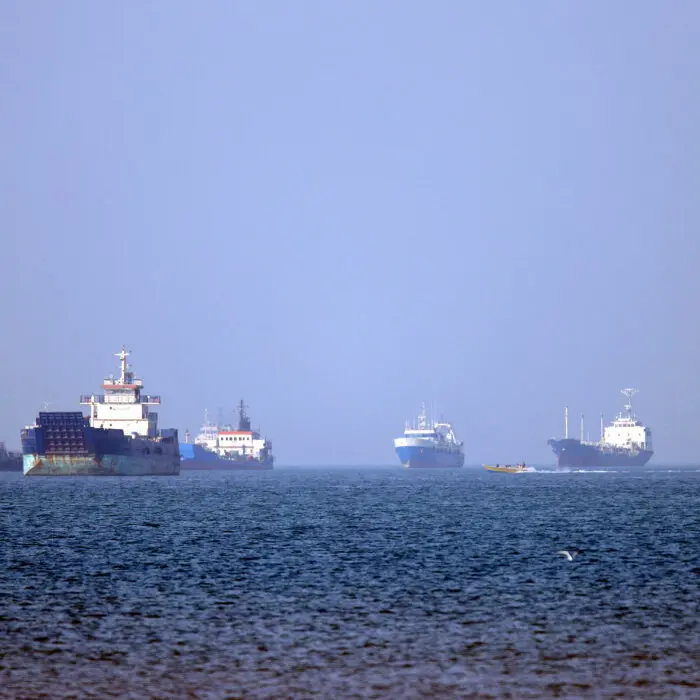
Vessels sail at Suru Beach in Bandar Abbas along the Strait of Hormuz on June 1, 2026. Amirhossein Khorgooei/ISNA/AFP via Getty Images
The Australian government is calling for de-escalation after U.S. President Donald Trump re-imposed a naval blockade of the Strait of Hormuz and proposed a 20 percent levy on all cargo shipped through the region.
Following the latest developments in the Middle East, Acting Transport Minister Kristy McBain urged the United States and Iran to exercise restraint and work towards a diplomatic solution amid concerns over the impact on Australia’s fuel supply.
“Australia has long called for de-escalation and an end to this conflict,” she told ABC Radio.
“As we’ve said, the longer this war goes on, the greater the impact will be, particularly to Australian households and Australian businesses.
“So, we really need to see some restraint here and constructive engagement to prevent further escalation and secure a lasting agreement which will benefit not only Australia, but other countries around the world as well.”
Related Stories
“We are reinstating the Iranian blockade, so named because it is only stopping Iran’s ships or customers from entering or leaving. All other countries will have fair and open use of the Strait,” he said on social media.
McBain said the government was monitoring fuel reserves closely and had been building stockpiles in response to ongoing tension in the Middle East.
“As we’ve been highlighting, and the minister for energy has been giving those numbers daily, we’ve been steadily increasing our reserves,” she said.
“We now hold more reserves in the country than we did at the end of February, and we’ll continue to secure additional shipments as required. We’ve been working really constructively with industry not only for fuel supplies, but also for fertiliser supplies to make sure that we have enough here”
Concerns About Trump’s Proposed 20 Percent Levy
On Trump’s proposed 20 percent cargo charge, McBain raised concerns about potential flow-on effects for Australian consumers.
“We’ll wait to see what happens here,” she said.
“We know that there needs to be an agreement that is struck and one that lasts because otherwise it is Australian households and consumers who ultimately end up paying the price.”
When asked whether the federal government believed the global oil market had proved more resilient than initially expected, McBain said countries had worked together “pretty constructively.”
“We haven’t seen the crisis escalate as perhaps everyone thought it might,” she said.
“But it is really important that shipping continues to be free wherever it goes and make sure that there isn’t any adverse outcomes to people who are ultimately ferrying these ships around.”