





Russia is unhappy about the ongoing Middle East conflict and is not seeking to profit from other countries’ problems, Foreign Minister Sergey Lavrov has said.
In an interview with France Televisions published on Thursday, Lavrov was pressed on whether Russia benefits from skyrocketing oil prices due to the US-Israeli strikes on Iran and plummeting crude maritime traffic through the Strait of Hormuz.
“We are never happy to see wars unleashed by other people or countries lead to global market gyrations that drive up prices for energy and other commodities exported by the Russian Federation,” Lavrov said.
However, even as the war sends shockwaves through global markets, Moscow “will always, regardless of circumstances, trade and maintain economic relations with everyone who is interested in trading with us,” the minister stressed.
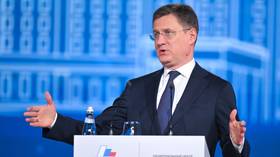
Lavrov went on to remark that the US seeks “to dominate global energy markets.” He recalled that President Donald Trump clearly signaled that he wanted to control the Strait of Hormuz together with Iran. He also cited Venezuela as another example of Washington pursuing resource dominance behind the cover of political justifications.
“The claim was that the drug traffickers’ regime must be taken down. The bottom line is that the United States is taking control of Venezuela’s oil industry,” he said.
Lavrov also weighed in on the US decision to ease restrictions on Russian oil exports, stressing that “the US sanctions are outright illegitimate. Complying with them is out of the question.”
He dismissed as meaningless a US Treasury waiver allowing Russian crude already loaded on vessels to reach their destinations, saying tankers “continue moving exactly as they did before.” “For us and our honest and reliable partners they simply do not exist,” he said of the sanctions.
Lavrov’s remarks come as the Financial Times earlier this month called Russia “the biggest winner from the conflict in the Middle East,” calculating that Moscow was earning up to $150 million a day in extra budget revenues.
With oil prices rising, Moscow could pocket a total of $3.3 billion to $4.9 billion by the end of March, according to FT estimates.
A separate analysis by Izvestia suggested that if current tensions persist, the total windfall by the end of the year could reach up to 3.5 trillion rubles (around $42 billion), enough to cover much of Russia’s expected annual budget deficit.
You can share this story on social media: