




Home loan figures, business sentiment and a speech by the Reserve Bank’s chief economist loom, as the latest interest rate rise fallout continues.
The RBA’s decision to lift the cash rate to an 18-year high on Tuesday was the latest blow to households struggling to service mortgages and shoulder the rising cost of living.
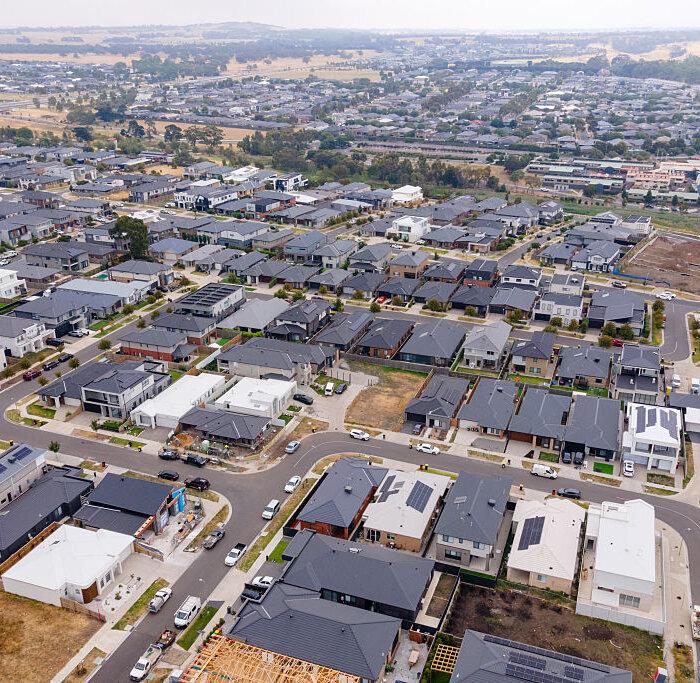
And it will further weigh on a national housing downturn already on track to be the deepest on record.
Figures compiled by RBA staff and released alongside the rates decision showed new home loan commitments have fallen 27 percent below their peak in November 2025.
The Australian Bureau of Statistics is expected to reveal on Wednesday that the decline in new home loan numbers accelerated in the September quarter from a 5.4 percent drop in the three months ended June.
Economist at ANZ bank have tipped a seven percent drop in overall lending.
Related Stories

“Housing prices and sales volumes both declined in Q3, which will weigh on new housing lending,” ANZ economist Madeline Dunk said.
“The monthly credit data [which is a stock measure and is slower moving] suggests a sharp pullback in investor demand, which is likely to show up more clearly in the lending release.”
While owner-occupier lending has edged lower, their share of the loan market has increased as investors have deserted the market in droves.
RBA figures showed the largest fall in investor loans on record, although lending for newly-built dwellings remained relatively resilient.
Reserve Bank Governor Michele Bullock noted investors tend to exaggerate housing cycles but the movement had been particularly pronounced this time because of the government’s curbs to property investor tax breaks in the May budget.
As home prices continue to decline, they are expected to weigh on spending through what is known as the wealth effect.
AMP chief economist Shane Oliver projects a 15 percent fall in prices, from peak to trough, which will knock around 1.5 percent off consumer spending as it leaves home owners feeling poorer.
But household spending has so far held up.
ABS data last week showed spending was up 6.8 percent over the year. Even accounting for higher prices, spending was still up a robust 3.2 percent in volume terms.
That’s despite Westpac consumer confidence remaining in deeply pessimistic territory, where it is expected to remain when the index is updated on Tuesday.
NAB’s business sentiment survey is likely to show employer spirits in a similarly dour vein.
But with oil prices turning lower following the Democrats’ sweeping victory in the U.S. midterms and markets predicting interest rates have hit their peak, conditions may be about to bottom out.
Eyes will therefore be on RBA chief economist Sarah Hunter when she addresses the UBS Australasia Conference in Sydney on Monday for any indication of where rates are going next.
Former banker Marnie Baker will deliver her first speech as RBA board member to the Australian Retail Credit Association on Thursday, after a review of the central bank required board members to deliver public speeches to boost transparency and communication.
Meanwhile, fears appear to have evaporated among Wall Street investors that a Democratic-led Congress would result in tougher AI regulation even amid fresh U.S. interest-rate concerns.
The S&P 500 advanced 23 points, or 0.32 percent, to end the session at 7,376.86. The Nasdaq gained 264 points to 24,579.43 and the Dow Jones Industrial Average declined 0.46 percent, to 51,285.73.
Australian share futures climbed 29 points, or 0.32 percent, to 22,711.
The S&P/ASX200 fell 44.3 points on Friday, down 0.49 percent, to 9,020.8, as the broader All Ordinaries lost 60.5 points, or 0.66 percent, to 9,144.7.
By Jacob Shteyman in Canberra