





Australia’s two national supercomputers are running out of capacity and risk being replaced by weaker machines or shut down unless the government commits about $2 billion (US$1.4 billion) over the next decade, a parliamentary committee has been told.
Mark Stickells, CEO of the Pawsey Supercomputing Research Centre in Perth, told the Joint Select Committee on Artificial Intelligence that the timing was pressing.
“Last year would have been better than this year, and next year is absolutely critical,” he said.
Stickells said that without a decision, the system risks being wound down and closed. The cost has also increased since the federal government provided $70 million in 2018 to fund Pawsey’s current machine.
Replacing it now would cost “four to five times” as much, he estimated.
Supercomputers are extremely powerful machines used for complex, computationally intensive tasks such as weather forecasting, climate modelling, and medical research.
Related Stories
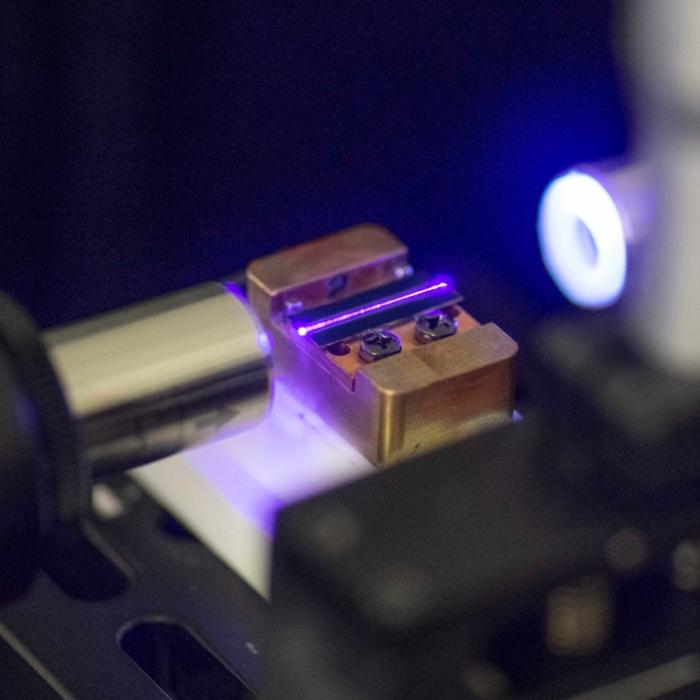
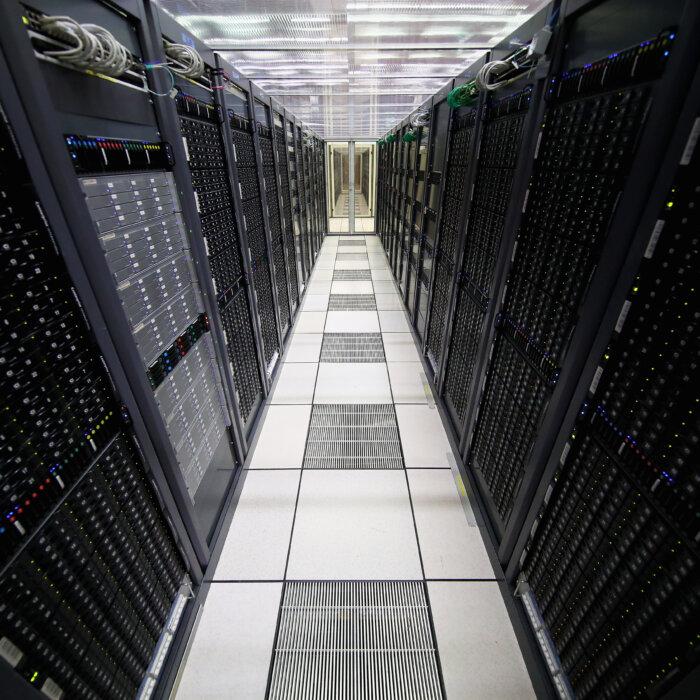
Pawsey runs one called Setonix, and the National Computational Infrastructure in Canberra runs another, called Gadi. Both are publicly owned and are used by researchers and government agencies across the country.
They estimated it would cost $1.8 billion to $2.1 billion, including about $1 billion in the first five years.
Supercomputers Overwhelmed by Demand
At present, the two supercomputers are unable to meet computing demand from the government and other research organisations.
Professor Andrew Rohl, the director of the National Computational Infrastructure, said requests for time on the two machines were about 2.9 times greater than their available capacity.
The replacement for Gadi, now being procured, will be less powerful than its predecessor. Setonix, which reaches the end of its supported life in 2028, would not be replaced under current funding, as the artificial intelligence boom has driven up the cost of computer components.
Rohl said the Bureau of Meteorology and Geoscience Australia want to build artificial intelligence models from data that is unique to Australia, but do not have “anywhere near enough” of advanced GPUs (graphics processing unit) to do it at a price a government department can afford.
He said Canberra had 120 of the latest GPUs, while South Korea had just bought 8,500 for its research sector, and Singapore had opened a new national centre with about 1,500 GPUs only a few weeks earlier.
“We’re very far behind,” Rohl said.
The submission said South Korea was spending 1.46 trillion won ($1.35 billion) on 13,000 high performance GPUs, while Canada and Britain had each committed billions of dollars to public computing. By comparison, current funding for the National Computational Infrastructure would not buy even 500 of the latest chips.
Are There Other Solutions to the Computing Capacity Shortfall?
Labor MP Tim Watts said the committee was also considering a cheaper option, which would require AI companies to set aside computing capacity for public use as part of their deals with the government.
Stickells said the national facilities have run a reservation scheme for researchers for more than a decade, and that it is heavily oversubscribed. He also noted that reserved private capacity should not be treated as a replacement for public investment.
Meanwhile, Rohl said the big commercial computing centres are mainly set up for large language models—the systems behind chatbots, while much of science needs a different kind of calculation.
He warned that Australia’s research data is so large that moving it is slow and costly, citing his facility’s efforts to transfer two petabytes of data between data centres.
“It takes months,” he said, noting that big cloud companies often charge fees that can be “a crippling cost.”
Stickells added that a simple reservation deal would not pay for the specialist staff who help researchers and look after sensitive data.