





A woman in her 30s once came to my clinic for gastrointestinal discomfort—not weight loss. She had been taking corticosteroids for asthma and described an unusually strong appetite: Even after two or three breakfasts, she still wanted more.
I treated her with Bagua acupuncture, which involves stimulating points around the navel. Over subsequent visits, she reported less digestive discomfort, earlier fullness, and a shrinking waistline. At follow-up, she said her weight remained stable without deliberate dieting or additional exercise.
Her experience prompted a question that has become increasingly relevant with the popularity of GLP-1 medications: Beyond reducing hunger, how can we help people feel comfortable, nourished, and well throughout weight-loss treatment?
Traditional Chinese medicine (TCM) approaches that question by considering digestion, energy, and emotional well-being together.
Why Eating Less Is Only Part of the Picture
Related Stories


For patients, this can create a practical challenge: They may feel less hungry while also struggling to eat comfortably.
These concerns make supportive care important throughout treatment. From a TCM perspective, the aim is to address the person’s digestive symptoms, energy, and eating patterns—not merely to suppress appetite further.
Connecting Digestion, Appetite, and Emotions
TCM examines digestion and appetite through patterns of symptoms. Two people seeking weight management may receive different recommendations because their experiences differ.
Someone with persistent hunger and difficulty feeling satisfied may be described as having excess stomach fire. By contrast, someone who feels cold, tired, bloated, or heavy may fit a pattern of yang deficiency with dampness.
In TCM, “yang” refers to warming and activating functions, while “dampness” describes a pattern associated with heaviness and impaired fluid processing. The TCM “spleen” also encompasses traditional digestive functions; it does not refer only to the anatomical spleen.
These concepts are not direct translations of particular hormones or metabolic measurements. They provide a framework for choosing treatment according to the whole symptom pattern.
3-Stage TCM Conditioning Plan With Slimming Injections
For those currently using slimming injections, combining them with appropriate TCM conditioning may help adjust their physical condition, alleviate gastrointestinal discomfort, and, in some people, improve metabolism.
Clinically, adjustments can be conducted according to various stages:
Stage 1: Adjusting Gastrointestinal Function
Before starting GLP‑1 injections, it can be helpful to give your digestive system a little extra support, especially if you experience stomach sensitivity.
Purpose: To first help stabilize gastrointestinal function; since GLP-1 drugs commonly cause gastrointestinal side effects such as nausea, vomiting, abdominal pain, and constipation, pre-treatment regulations may help improve tolerance if one is prone to gastrointestinal discomfort, but prescriptions should still be tailored to individual needs.
Stage 2: Maintaining Energy and Smooth Bowel Movements
Some people may experience fatigue, a dip in energy, or constipation while using GLP-1 drugs. Treatment can be divided into two aspects: improving overall condition and improving intestinal function.
Improving Fatigue and Overall Condition
Many people notice their energy levels dip once they begin GLP‑1 injections, so supporting the body’s overall vitality can make this phase feel more manageable.
Acupressure: Sea of Qi (Qi Hai, CV6) and Gate of Origin (Guan Yuan, CV4) are commonly used acupoints in TCM for treatment, often employed as supplementary maintenance for fatigue and weakness. Sea of Qi is located two finger-widths below the navel. Gate of Origin is located four finger-widths below the navel.
Moxibustion: Spirit Palace (Shen Que, CV8) is an important location for nourishing vital energy in TCM. The warmth and stimulation from burning moxa can relax the abdomen, helping relieve fatigue and low energy.

Daily Care: Maintain moderate sun exposure and choose mild teas, such as astragalus and red dates, according to your constitution.
Improving Bowel Movements and Promoting Intestinal Peristalsis
Constipation is a common experience for people using GLP‑1 medications, so gentle strategies that support regular bowel movements can make this stage more comfortable.
The Leg Three Miles acupoint is located four finger-widths directly below the outer knee eye.
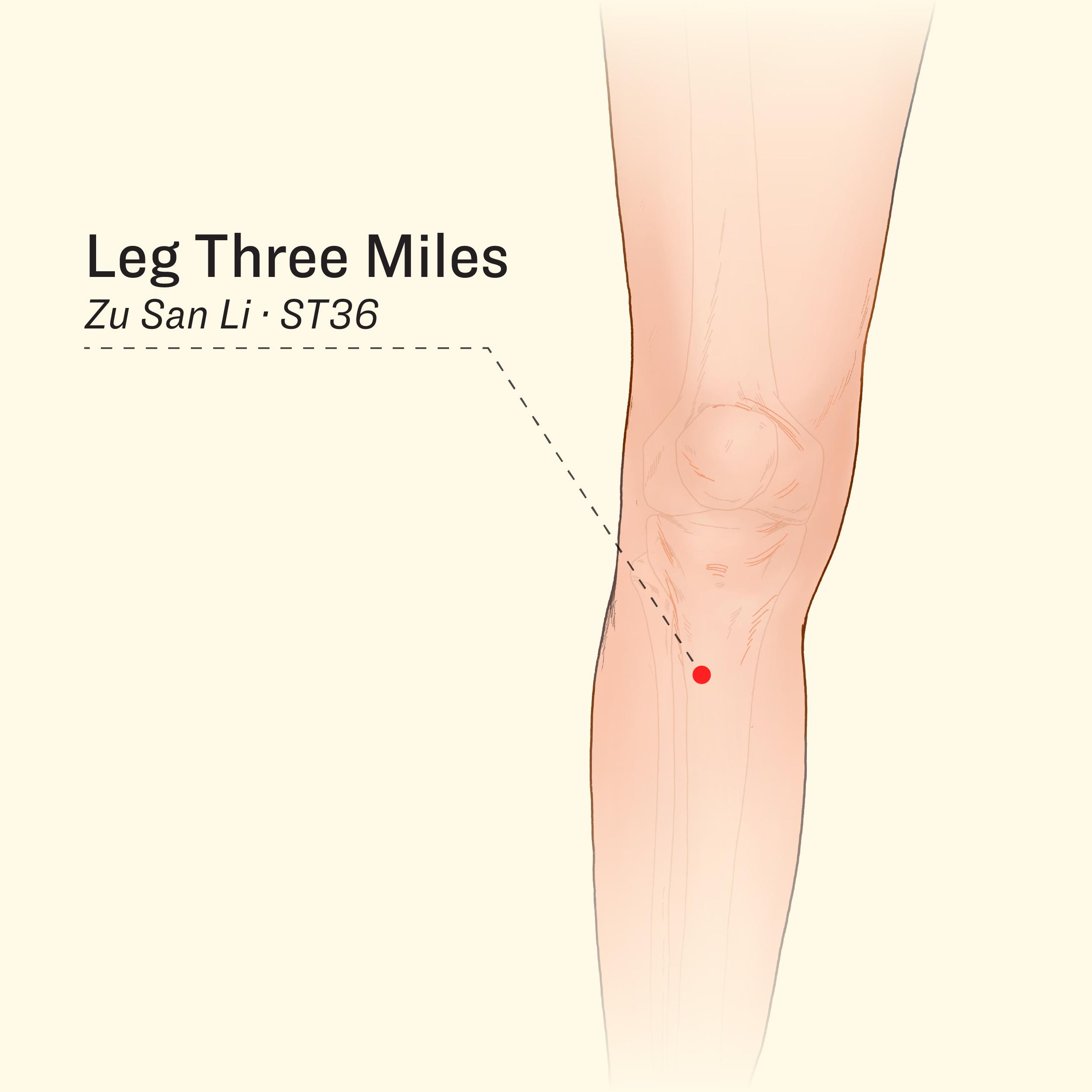
TCM Treatment: Under the evaluation of a physician, it serves to mildly lubricate the intestines and regulate the spleen and stomach. For example, depending on the constitution, Xiangsha Liujunzi Decoction can be used to warm and nourish the spleen and stomach, with the addition of other herbs such as hemp seed, cassia seed, or angelica to help improve bowel movements. Avoid long-term reliance on stimulant laxatives such as rhubarb and senna leaves, as these may affect intestinal function.
Abdominal Exercises: Simple abdominal exercises (such as abdominal swinging or core exercises) help stimulate intestinal peristalsis and promote smooth bowel movements.
Stage 3: Stabilizing Appetite and Adjusting Gastrointestinal Rhythm (2 Weeks Before Discontinuation)
Auricular Acupuncture: Appetite can be regulated using auricular acupuncture. Applying Vaccaria seeds or magnetic beads to the “Hunger Point” on the ear can help increase satiety; this can be combined with the Auricular Gate of Spirit (Shen Men) acupoint for calming emotions.
Vaccaria seeds are the seeds of a plant in the Caryophyllaceae family, are of moderate size, and are non-irritating to the skin, making them suitable for auricular acupuncture massage.

Constitutional Conditioning: Formulas such as Shenling Baizhu Powder are often used for those with weak spleen and stomach or excessive dampness (requires physician evaluation) to help stabilize gastrointestinal function and overall rhythm.
Daily Care: Start with regular sleep patterns and emotional relaxation, and incorporate mild teas (such as rose tea) as daily care to help relax the mind and body and reduce emotional eating.
Taking Care of Emotions
During weight loss, many people experience “emotional eating.” Once they encounter stress or depression, they may easily turn to eating for temporary relief. For those who primarily eat emotionally, simply suppressing appetite may have limited long-term effects.
From a TCM perspective, long-term emotional suppression can affect the flow of qi (vital energy), leading to a state known as “stagnation transforming into fire.” Stagnation transforming into fire can be understood as the accumulation of stress and emotions affecting the body’s regulatory mechanisms, making people more prone to irritability and cravings. Therefore, while adjusting weight, emphasis is also placed on managing emotions and stress.
Common clinical adjustment methods include:
-
Herbal Remedies: Such as Jiawei Xiaoyao Powder, often used to soothe the liver, relieve depression, and regulate emotions. A physician evaluation before use is essential.
-
Acupoint Assistance: Through appropriate acupoint stimulation, some people may experience relaxation and emotional stability.
-
Daily Habits: Practicing relaxation techniques and maintaining a regular sleep schedule can help reduce the impact of stress on eating behavior.
When the emotional state becomes more stable, there is less dependence on food, which is often helpful for maintaining weight loss.
Note: Some of the herbs mentioned above may sound unfamiliar, but many can be purchased at health food and Asian grocery stores. However, due to individual differences, please consult a professional physician for a specific treatment plan.
It’s not unusual for people to regain weight after stopping GLP‑1 injections, as the body and appetite naturally shift again. In TCM, long‑term balance comes from supporting not only digestion and metabolism but also the emotional patterns that influence them. When the gut, energy, and emotions are cared for together, the body often moves through these changes with greater ease.
GLP‑1 medications require guidance from your healthcare provider; however, TCM can offer a gentle, complementary way to stay attuned to your body’s signals and cultivate steadier well‑being over time.