





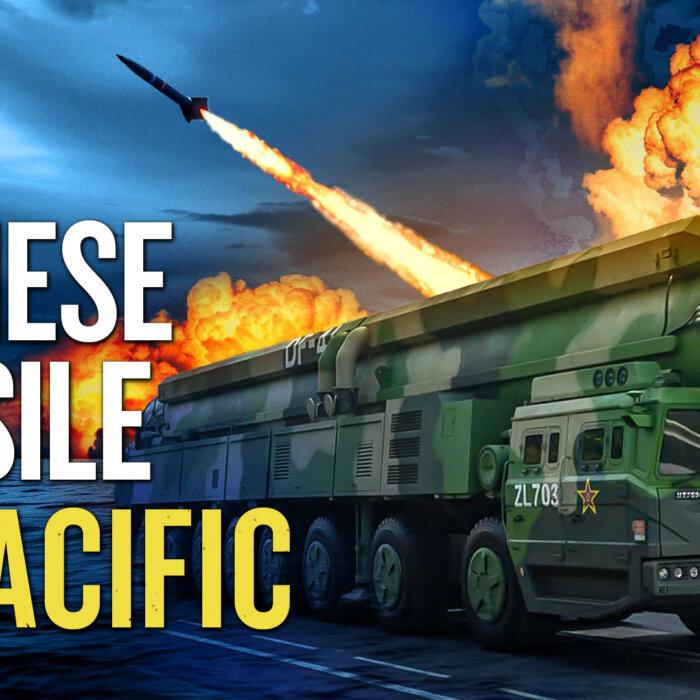
China’s DF-41 nuclear-capable intercontinental ballistic missiles are seen during a military parade at Tiananmen Square in Beijing on Oct. 1, 2019. Greg Baker/AFP via Getty Images
A submarine of the Chinese People’s Liberation Army Navy (PLAN) has test-fired an intercontinental missile in the “high seas” of the Pacific, according to state media.
Earlier in the day, Australian media outlets reported the PLAN had been notifying regional leaders of their intention to fire the dummy warhead.
Australian Acting Prime Minister Richard Marles confirmed his government had been notified.
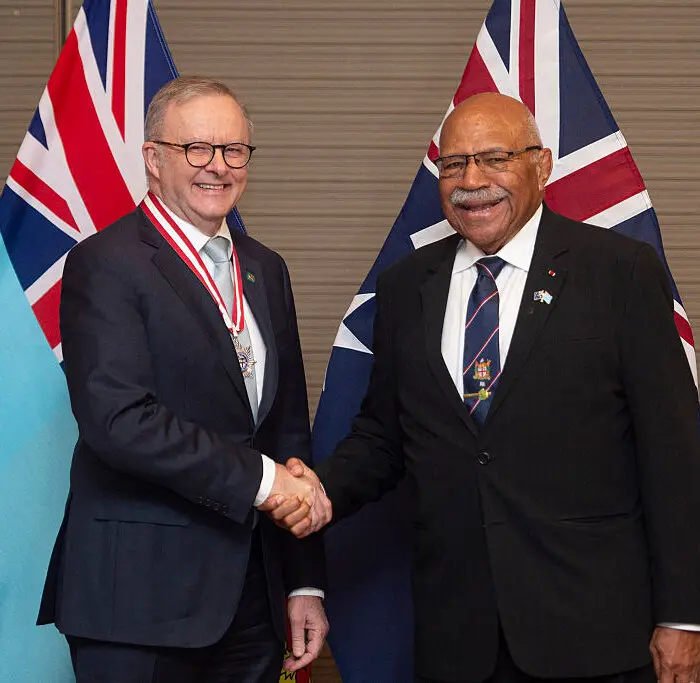
“We were informed by China today of its intention to do this test,” Marles told reporters on July 6, while Prime Minister Anthony Albanese was in Suva, Fiji.
“This is a long-range missile test, and we are very concerned about any actions that undermine the stability, peace and security of the Pacific,” Marles said, who is also the defence minister.
“We are completely committed to the Oceans of Peace declaration that was made by the Pacific Island Forum last year, and our primary focus, our primary concern, is on maintaining the peace and security of the Pacific.”
Related Stories
The Epoch Times contacted the Australian Department of Foreign Affairs and Trade for further comment.
Data from Starboard Maritime Intelligence reveals three Chinese satellite-tracking vessels positioned throughout the South Pacific region.
Two vessels are located near the Federated States of Micronesia (FSM), and a third in Fiji’s capital Suva, incidentally where Australian Prime Minister Albanese just sign-off a landmark defence deal with Fiji.
“These vessels carry large satellite dishes used to track missile launches and other space activity and are likely in the Pacific to collect data from the missile test China has reportedly notified regional governments to expect within 24 hours,” said Mark Douglas, an analyst for Starboard, in comments obtained by Reuters.
“This test has been planned well in advance. That said, the notification landing the day after Australia and Fiji signed the Ocean of Peace Alliance is interesting, to say the least,” Douglas said, pointing to the times the vessels departed China.
The two vessels near Micronesia left China on June 25 and the third in early May.
Article 6 of the deal states that “each party recognises that an armed attack on any of the Parties within the Pacific would be dangerous to each other’s peace and security as well as the security of the Pacific, and declares that it would act to meet the common danger, in accordance with its domestic processes.”
The trio of naval vessels subsequently circumnavigated the entire Australian continent.