





Patients with advanced pancreatic cancer—a disease that typically kills within a year—lived nearly twice as long when a common amino acid supplement was added to their chemotherapy, according to a small early-stage trial at Cedars-Sinai.
L-glutamine is FDA-approved as a treatment for sickle cell disease, though that approval has no bearing on how it performs against cancer; it simply means the compound is well-studied and available.
Patients who took the supplement alongside chemo survived a median of 22 months, well above the typical range of 8 to 13 months. Researchers also noticed a secondary benefit: Half the patients maintained their body weight during treatment, unusual for a cancer that often causes severe weight and muscle loss.
Cancer’s Fuel Source Used Against It
Related Stories
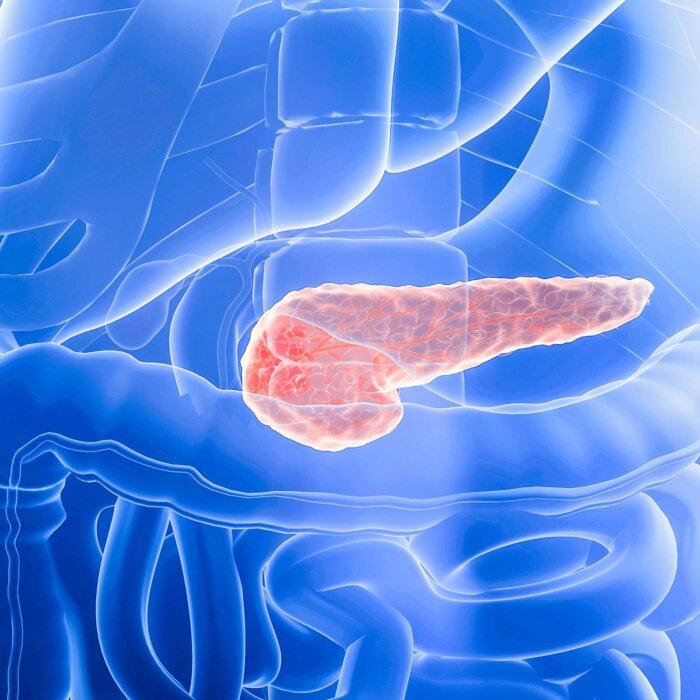
Researchers originally weren’t trying to fight the cancer directly with L-glutamine. They were trying to protect the gut. Pancreatic cancer and chemo both damage digestion, which can cause dangerous weight loss. L-glutamine is known to help heal the gut lining, so the team hoped it would ease that side effect.
What they found hinted at something more: When cancer cells were exposed to high doses of L-glutamine, they became more vulnerable to chemotherapy, aligning with the tumor size reductions seen in patients.
Researchers also spotted a link between the bacteria living in patients’ guts and how well they responded to treatment, suggesting L-glutamine’s benefit may come partly from reshaping the gut microbiome, the community of bacteria that helps regulate digestion, inflammation, and even how the body responds to drugs.
Effect on Microbiome Could Explain Benefit
The mechanism may come down to dosing, according to Prof. Jordan Winter at the Department of Surgery, School of Medicine and the Case Comprehensive Cancer Center at Case Western University, who was not involved in the study.
While cancer cells require L-glutamine to grow, depending on how much is given and in what context, the same molecule that normally supports tumors could work against them once chemotherapy is introduced, he told The Epoch Times.
These findings could transition L-glutamine from being supportive to cancer to becoming therapeutic.
The basic biology hasn’t flipped, Winter said—L-glutamine is still likely fueling the cancer cells to some extent. “So in some ways you are still probably helping the cancer proliferate, grow and survive.” But what the authors are proposing, he noted, is that it’s also having a therapeutic effect through its effects on the microbiome.
“This is hypothesis-generating, not groundbreaking.”
Because L-glutamine in this study was orally administered rather than intravenously, it passed through the digestive system, where researchers detected changes in metabolites in the patients’ stool. That pattern led them to hypothesize that interaction with the microbiome may be what is improving patients’ survival.
Expert Urges Caution
Outside researchers say the findings are intriguing but shouldn’t be overstated.
“I would describe the findings as promising rather than practice-changing,” Dr. Jaekyung Cheon, an associate member in the Department of Gastrointestinal Oncology at Moffitt Cancer Center in Tampa, Florida, and not involved in the study, told The Epoch Times.
“With only 16 patients, a few exceptional responders can substantially influence the results,” Cheon said.
Most importantly, without a randomized control group, it cannot be determined whether the favorable outcomes were attributable to L-glutamine, he said.
“These findings warrant further investigation in a larger randomized trial before changing clinical practice.”