





The Fitburg vessel seized by authorities in the port of Kantvik, Kirkkonummi, Finland, on Jan. 4, 2026. Markku Ulander/Lehtikuva via Reuters
A Finnish court found the captain and a crew member of the cargo ship Fitburg guilty of damaging two subsea telecommunications cables in the Gulf of Finland last year.
The court found both defendants guilty of aggravated sabotage, it said on Nov. 5.
The Helsinki District Court sentenced the captain to three years and six months in prison and the crew member to two years and 10 months.
In a statement, it said the two acted intentionally when the ship dragged an anchor chain and anchor shank along the seabed for around 130 km (81 miles), damaging two telecommunications cables and attempting to damage seven other telecommunications and electricity cables and one gas pipeline.
Related Stories

It said it proved the anchor was dropped into the sea after leaving the port of St. Petersburg and before the vessel left Russian territorial waters.
“Taking into account the damage caused and the risk of significantly more significant damage, the District Court has held that the act has caused a particularly serious danger to important functions of society,” it said.
The defendants, who are subject to travel bans, denied any wrongdoing and have challenged Finland’s jurisdiction in the case.
The captain will appeal the verdict, while the crew member has not yet decided whether to do so, their respective lawyers said.
The court also ordered the two defendants to pay damages.
Finnish authorities said in an August 2024 statement that, in addition to preventing Finland from using the cables, the cable owners suffered at least 60 million euros (about $70 million) in immediate damages, in repair costs alone.
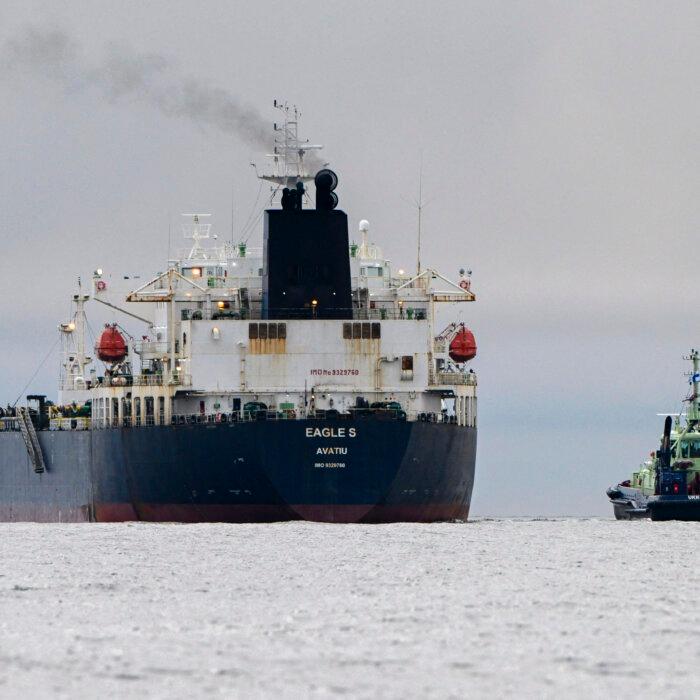
A Helsinki court in October 2025 dismissed the criminal case against the Eagle S captain and other crew members, ruling that prosecutors failed to prove intent and that any alleged negligence must be pursued by the ship’s flag state or the crew’s native countries.
However, the Helsinki Court of Appeal overturned that decision in August this year and ruled that Finland now has jurisdiction to hear the case.
NATO has made specific warnings about undersea cables in the Baltic Sea.
On Oct. 21, at NATO’s Critical Undersea Infrastructure (CUI)-Network in Rostock, Germany, NATO’s assistant secretary general for Cyber and Digital Transformation and special coordinator for Hybrid Threats, Jean-Charles Ellermann-Kingombe, said, “critical infrastructure is a target.”
“You will not always see them, they will not always be public, it will not always be tit for tat. Sometimes it will be symmetric, sometimes anti-symmetric.”
Guy Birchall and Reuters contributed to this report.