





The Australian National University (ANU) has secured funding from Google’s philanthropic arm to upgrade a key fusion energy software tool using artificial intelligence (AI), as investors pour record sums into a technology that has yet to produce commercial electricity.
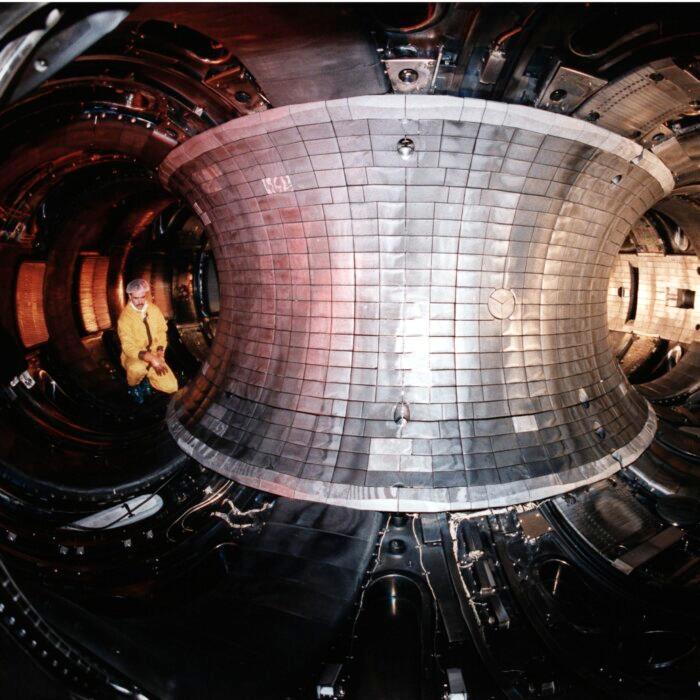
Led by Professor Matthew Hole, the project will upgrade SPEC, software used by researchers worldwide to model the magnetic fields needed to control plasma, the extremely hot gas used in fusion reactions.
ANU’s Nov. 6 announcement did not disclose how much funding Google had provided.
“Fusion research depends on our ability to accurately predict how plasmas behave in complex magnetic environments,” Hole said.
“This project will make those calculations faster, support automated optimisation, and make the technology easier for researchers to use.”
Related Stories

The team will rebuild SPEC to run more efficiently on graphics processing units, the powerful computer chips widely used for AI.
It will also develop AI-assisted tools to help researchers turn scientific questions into simulations, check calculations, and explain results in plain language.
The software will be made freely available to researchers worldwide.
Commercial Fusion Remains Years Away
Fusion, the process that powers the Sun, joins light atomic nuclei to release energy. Unlike conventional nuclear power plants, which split atoms apart, fusion aims to generate electricity by combining them.
The technology offers to potential for a reliable source of low-carbon electricity, but significant scientific and engineering challenges remain.
In April 2025, the facility produced 8.6 megajoules of fusion energy from 2.08 megajoules of laser energy delivered to the target, more than four times the laser energy delivered.
However, the experiment lasted only a tiny fraction of a second, and the figures did not include the much greater electricity needed to operate the laser system. The facility has not produced electricity for the grid.
Industry Targets Commercial Power by the 2030s
Despite the challenges, private investment in fusion energy is accelerating.
The Fusion Industry Association said 56 companies raised a record US$4.48 billion in the 12 months to July 2026, up 69 percent from the previous year.
Its industry survey found that 71 percent of participating companies expected the first fusion power plant to deliver commercial electricity by the 2030s.
The Congressional Research Service cautioned that the timing of commercial fusion “may be difficult to predict,” pointing to physicist Richard Post’s 1971 prediction that fusion power would be economically viable by 1990.