





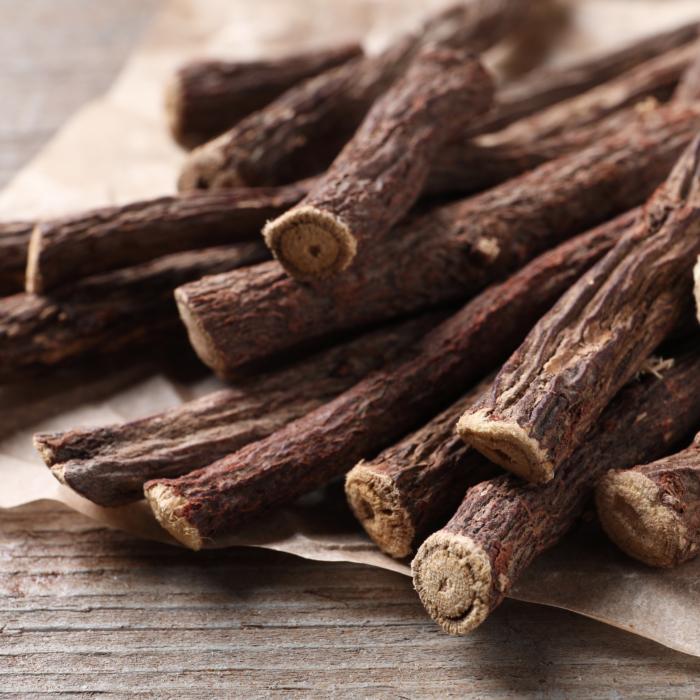
When archaeologists opened King Tutankhamun’s tomb, they found gold, jewels—and licorice root. Three thousand years later, scientists are trying to figure out why ancient cultures thought it belonged there.
A Root Used Across Every Ancient Civilization
Licorice’s medicinal use goes back further than almost any other herb on record. It’s mentioned in the “Epic of Gilgamesh,” the oldest known epic in the world, Nazim Mamedov, a former assistant professor of Ethnobotany and Ethnopharmacology at the University of Massachusetts Amherst, told The Epoch Times. Today, he added, it remains widely used in traditional medicine across the Middle East, Central Asia, and East Asia.
Hippocrates considered licorice an effective remedy for dehydration and ulcers. Ancient Egyptians turned licorice root into a sweet drink and valued it enough to bury it with their dead, which is why it appears in Tutankhamun’s tomb.
Mamedov, who has published papers about medicinal plants for the last 50 years, including several on licorice, said its most common traditional uses include treating cough, bronchial asthma, Addison’s disease, cold sores, mouth sores, stomach pain, ulcers, eczema, and the common cold.
Related Stories
Licorice is also classified as an adaptogen, a substance believed to help the body handle physical, emotional, and environmental stress. Chewing on licorice sticks is a widely used practice to improve the health of teeth and gums.
Two of the world’s oldest medical traditions treat licorice as a cornerstone herb, not a minor remedy.
In Chinese medicine, licorice, called gan cao, is included in most herbal formulas. This is largely because of its sweet flavor—which counteracts the strong taste of many herbs—and its harmonizing actions, which help diminish the toxicity or harshness of other herbs in a formula and help them work together more effectively.
Most herbs are thought to target specific organ systems or parts of the body; however, licorice is unique as a guide herb, helping direct other herbs in a formula to all twelve meridians—pathways through which the body’s energy travels—located throughout the body. It strengthens the digestive and respiratory systems, builds the body’s qi (energy), clears heat, reduces toxicity, and promotes longevity.
In Ayurveda, licorice is called Yashtimadhu, meaning “sweet stick,” and is highly regarded as a rejuvenating tonic (rasayana). It is sweet and cooling and is traditionally used to soothe the stomach and throat, support respiratory health, heal ulcers, treat depression, and act as a general tonic for strength, immunity, and mood.
The Chemistry Behind the Benefits
Perhaps the most famous bioactive compound is glycyrrhizin, which is responsible for licorice’s sweetness, many of its medicinal properties, and most of its side effects.
Once you eat licorice, gut bacteria convert glycyrrhizin into a related compound called glycyrrhetinic acid. This conversion drives licorice’s anti-inflammatory, antiviral, antioxidant, and tissue-protective effects.
But glycyrrhetinic acid has a downside. It interferes with normal kidney function and the hormones that control the body’s salt and water balance, essentially tricking them into holding on to more salt and water than they should. As a result, blood pressure rises, and potassium levels fall, which can strain the heart.
Because of this blood pressure side effect, licorice is available without glycyrrhizin, called deglycyrrhizinated licorice, or DGL. Removing glycyrrhizin eliminates the risks of high blood pressure, fluid retention, and potassium loss associated with regular licorice.
For Michael T. Murray, a naturopathic physician, author, researcher, and expert on natural medicines, DGL is his go-to form of licorice.
“DGL used to be discarded as inactive because it did not contain glycyrrhizic acid, only to be discovered as being more active in promoting healing of peptic ulcers,” he told The Epoch Times in an email.
“I have treated many cases of peptic ulcers over the years with 100 percent success using DGL. It is extremely safe with no side effects or contraindications.”
What Modern Research Shows
Modern research on licorice aligns with its traditional reputation, particularly for the respiratory and digestive systems.
Liver Health
In a lab study, it reduced hepatitis C virus levels in infected liver cells, with even small doses cutting viral activity by about half. Comparative studies using glycyrrhizin with interferon alpha—a hepatitis C treatment—found a synergistic effect, amplifying their antiviral effects when used together.
Digestive Health
Mouth and Throat
Early-Stage Findings
Safety: Who Should Be Cautious
For regular licorice, occasional use is generally not problematic for healthy people.
However, high doses or extended use can cause adverse effects, including raised blood pressure, low potassium, and fluid retention, which may trigger abnormal heart rhythms and make the heart work harder.
Licorice can also interact with diuretics, corticosteroids, digoxin, and some blood pressure medications.
Dosage and Preparation
As a food ingredient, licorice is considered safe. Medicinal use is where dosage and duration matter, and where a product’s glycyrrhizin content determines what is appropriate.
In a paper he wrote on licorice, Murray explained that dosage depends on its glycyrrhetinic acid content. The only exception is treating peptic ulcers, when DGL is preferred because it lacks side effects.
For most uses, the goal is to raise blood levels of glycyrrhetinic acid enough to produce beneficial effects without increasing the risk of side effects, he said. The following doses of licorice, taken three times daily, are commonly recommended for this purpose:
-
Powdered Licorice Root: 1 to 2 grams
-
Liquid Extract (1:1): 2 to 4 mL
-
Dry Extract (4:1): 250 to 500 mg
The one major exception is peptic ulcers, where deglycyrrhizinated licorice (DGL) works best when chewed, as it allows it to mix with saliva. Saliva appears to trigger the release of natural substances that help protect and repair the lining of the stomach and intestines. For this reason, DGL capsules have not been shown to work as well as chewable tablets.
Few herbs have a resume this long or this consistent. As modern research validates and builds on its traditional uses, licorice has proven it’s a valuable herb to have around—from the tombs of Egyptian kings to your medicine cabinet.