



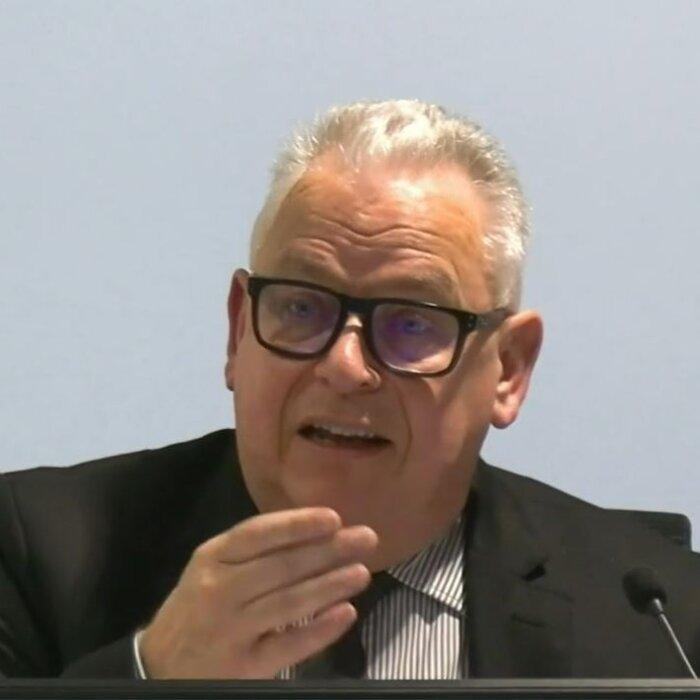
Business networking platform LinkedIn has seen spikes in harassment, abuse and hateful or derogatory comments since Hamas’s October 7, 2023 attack on Israel, the platform’s vice president of legal and digital safety, James Corrigan, has revealed.
At a recent hearing conducted by the Royal Commission into Antisemitism and Social Cohesion, Corrigan said the site enforced consistent user behaviour policies globally, although its team of 180 full-time trust and safety staff and around 1,500 contractors considered regional differences when applying them.
According to the vice president, LinkedIn has 17 million Australian users. The platform also employs nearly 200 staff in Australia; however, most work in sales rather than content moderation.
While AI is currently used to detect content that breaches the site’s guidelines, most decisions on whether to take action and what action to take are still made by humans.
From July to December 2023, the platform removed 26,141 instances of hateful or derogatory content. A year later, that figure leapt to 92,478. It has since remained steady, with 95,606 removals recorded from January to June 2025 and 95,535 from July to December that year.
While there was a lag in the increase, removals for harassment and abuse more than doubled. They rose from 231,882 between July and December 2023 to 250,236 during the same period a year later, before increasing further to 477,339 in the first half of 2025 and 477,911 in the second half.
Related Stories
The site had not analysed the data, so Corrigan was unable to say what proportion of the deleted content was anti-Semitic. However, he was able to provide a breakdown for Australia, which showed between 70 and 250 breaches in any given month, covering violations of the hate speech and harassment policies, as well as threats of violence “and potentially others.”
However, he noted that LinkedIn’s rules prohibiting attacks, intimidation, dehumanisation, threats and discriminatory action against individuals or groups based on characteristics such as race, ethnicity or national origin would be used to remove anti-Semitic content.
“I think certainly [LinkedIn’s policy] drafters had in mind that all types of religious discrimination and bigotry would be covered by the words there,” Corrigan said.
“Using ‘Zionist’ or ‘Zionism’ as a proxy in a hateful context for someone who’s Jewish or the Jewish religion is a violation of our policies in the same way.
“The overall idea is we want this stuff off the platform,” Corrigan said. “[We] don’t want people to see it.
“The point is, anti-Zionism, at its core, is an eradicationist, eliminationist movement that seeks the removal of Israel, either by force or by the creation of a single state,” he said.