





Jordan Bardella, the frontrunner in polls for France’s 2027 presidential race, says Europe can no longer rely on Washington unreservedly
Jordan Bardella, the leader of France’s largest opposition party, the National Rally (RN), has ruled out seeking an endorsement from US President Donald Trump for the 2027 presidential election, describing him as unpredictable and increasingly hard to read.
The 30-year-old Euroskeptic and anti-immigration politician is widely seen as the favorite to replace Marine Le Pen if she is barred from running. The longtime RN leader was convicted last year of misusing EU funds and banned from holding public office for five years. She denies wrongdoing, and a court is due to rule on her appeal in July.
In an interview with Politico released on Monday, Bardella described Trump’s behavior as “not only erratic but also extremely unsteady and constantly shifting.” Asked how he views the US president, Bardella described him as inconsistent, quipping: “There’s [his] Monday attitude, a Tuesday attitude, a Wednesday attitude.”
Bardella dismissed any suggestion that he might seek Trump’s backing, despite Trump’s history of supporting like-minded politicians abroad, including Poland’s Karol Nawrocki and Hungary’s Viktor Orban.
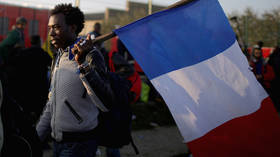
“The only support Marine Le Pen and I seek is that of the French people and French voters,” he said, adding that he has “no need for outside backing” and no intention of opening the door to “any form of foreign interference.”
The remarks mark a shift from Bardella’s earlier praise of Trump, whom he publicly admired for his energy and political success. According to the French politician, Trump’s second term has departed sharply from the first in no longer prioritizing domestic interests but rather being shaped by a vision of the US as “an empire with a dominant influence over the Western Hemisphere.”
That makes Trump “more dangerous” and creates uncertainty across Europe, which can no longer rely on Washington unreservedly. Bardella pointed to Trump’s tariff threats, which led to last year’s US-EU trade deal – an arrangement he described as “economic, financial and industrial vassalage.”
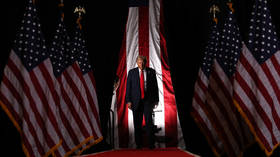
Relations between Washington and its European allies have been strained since Trump returned to office in 2025, with recurring disputes over trade, defense spending, digital regulation and Ukraine. Trump has repeatedly accused European NATO members of free-riding on US security guarantees while threatening new tariffs on the bloc. On Monday, he told the New York Post he would impose 100% tariffs on French wine unless Paris scrapped its digital services tax targeting revenues generated by US tech giants.
Trump’s 2026 National Security Strategy, describing the EU as strategically unreliable, also widened the rift, as did his push to acquire Greenland from Denmark. The US-Israeli war on Iran added to the friction after Washington announced the withdrawal of 5,000 troops from Germany and threatened further cuts in Spain and Italy following criticism of the conflict. Even some of Trump’s traditional allies in Europe, including Italian Prime Minister Giorgia Meloni and German AfD co-leader Alice Weidel, have increasingly distanced themselves from his foreign policy and territorial ambitions.