





One of my patients is in her 70s, and she loves baking, especially chocolate cakes. Her kitchen often smells like caramelizing sugar: butter softening on the counter, chocolate melting in a bowl, the oven timer ticking down.
However, what she used to love even more was eating the food she baked.
When she first came into my clinic, she carried extra weight, and her blood sugar had been rising. “I just can’t stop eating cakes,” she told me. “I wish you could make me lose my appetite so I wouldn’t want them anymore.”
An excess of sweet flavor had weakened her body’s ability to digest and metabolize what she ate, leading to weight gain and blood sugar levels that wouldn’t settle. A deeper issue was the flavors that her diet lacked.
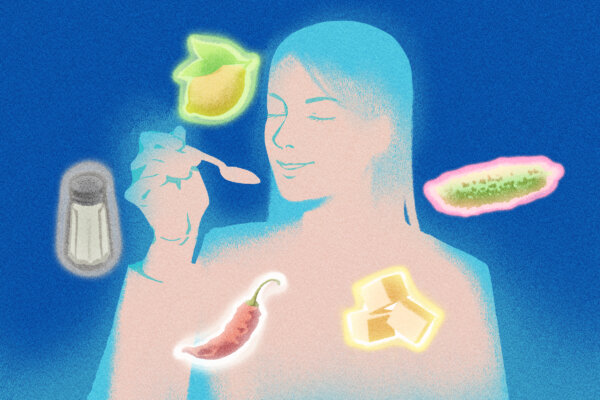
The ancient Chinese medical text “Yellow Emperor’s Inner Canon” (Huangdi Neijing) describes the five flavors—sweet, sour, pungent, bitter, and salty—as more than simple sensory pleasure.
Classical five-taste theory states that each flavor has a particular action and relationship with the body. While a moderately flavored, balanced diet supports healthy functioning, an excess of any flavor harms the body.
Western science also recognizes taste as a biological signal involved in physiological functions beyond the mouth.
Sweetness: Nourishing and Calming
In traditional Chinese medicine (TCM), the sweet flavor mainly refers to the mild sweetness of whole foods—not refined sugar.
Moderation is a key tenet in TCM, and sweetness is great at moderating strong flavors. This is why foods like grains, legumes, and vegetables, which carry a mild sweet flavor, are staples in traditional Chinese cooking.
Sweetness soothes in the short term, but creates harm in excess.
The Wisdom of Ancient Medicine
Sourness: Astringent and Slowing
Sour is the primary flavor used to control excess sweetness. You might have tried a little lemon, or a dash of vinegar in a dressing to cut through a very sweet meal.
Chemically, the sour flavor comes from organic acids and tannins, both of which give a tightening mouthfeel known as astringency.
In TCM, the sour flavor’s directional tendency is contracting; it pulls qi inward, tightens, and holds things in place.
Because of its astringency, sour substances are used to control diarrhea, hemorrhage, or heavy menstrual bleeding. However, excessive sourness restricts the movement of qi, creating stagnation, and leads to bloating and constipation.
Pungency: Warming and Dispersing
Pungency controls excessive sourness; it disperses and moves what is stagnant.
This flavor directs qi outward, promotes circulation, and opens pores. Therefore, in cases of indigestion and bloating, a mildly pungent drink like ginger tea is traditionally used to help move stagnant qi and trapped gas, easing the sensation of fullness and digestive discomfort.
Modern physiology notes similar effects but does not classify pungency or spiciness as a type of taste; instead, it is defined as a physical sensation of heat or pain. Pungent compounds such as capsaicin, allicin, and gingerol can stimulate nerves, resulting in tearing, sweating, or sensations of heat and pain.
You may recall having a stimulated appetite and mild warmth and sweating while eating pungent foods such as chili pepper, onions, ginger, or garlic. However, eating excessive pungent or spicy foods can build up heat and disperse qi outward, causing reflux, gut irritation, diarrhea, and vomiting.
Bitterness: Cooling and Antidiabetic
Traditionally, the bitter flavor is known for clearing and draining heat, and directing qi downward.
Moderate bitterness is, therefore, used to counter excessive warming and outward-dispersing effects of overly pungent meals.
Bitter foods still make just one modest part of your balanced meal. Because bitter foods can also be drying and draining, excessive bitterness may contribute to dry mouth or throat and constipation.
Saltiness: Hydrating and Retaining
The fifth flavor, saltiness, is associated with the kidneys and bladder. It moistens, softens, and encourages downward movement, including supporting bowel movements.
Traditionally, moderate salt helps counter the excessive drying and fluid-depleting action of bitterness. However, excessive salt can overburden the kidney-water system, leading to fluid retention, puffiness, and heaviness.
In the TCM five-flavor framework, natural sweetness softens the harshness of an overly salty meal by supporting the flow of qi and harmonizing digestion, which helps the body rebalance fluid and food transportation. However, this doesn’t mean that sweetness can neutralize excess sodium—this needs to be addressed by cutting down salt intake.
Just as different flavors can balance one another, they can also support and moderate, allowing their beneficial actions to work without becoming excessive.
Mindful Meals
The five-flavor framework is more than just a theory—it can also help you approach everyday meals in an altogether new way.
Pause and ask yourself: Which flavor is loudest in your diet? Which is absent? Is the flavor coming from a whole food, or from added sugar, salt, and processing?
1. Watch What Dominates
A balanced meal need not contain all five flavors in equal amounts. Rather, we should avoid allowing one flavor to dominate day after day; the point is to notice repeated patterns.
For instance, a meal can sometimes feel dominated by one taste: sweetness may linger strongly after eating, or pungency and saltiness may mask the flavors of the ingredients themselves. Observe the food you eat and try including other flavors in gentle ways.
Sugar and salt are flavors commonly present in our modern diets, even in products that often do not have an obvious sweet or salty taste. You can avoid having excess sweetness or saltiness by checking food labels.
2. Add Natural Flavors
The idea is not to remove pleasure from your food, but to give yourself the opportunity to also appreciate subtler flavors. Processed foods tend to overflavor, creating intense tastes. Whole foods, on the other hand, have milder tastes.
For example, a ripe carrot or sweet potato carries a gentle sweet taste and also provides fiber and micronutrients. Processed sweets and sugary beverages only deliver concentrated sugar.
3. Balance Flavors
Eat a variety of foods to introduce different flavors, such as whole grains, beans, nuts, vegetables, fruits, and animal protein.
Color is a way to introduce variety. In TCM, different food colors are often linked to different flavors. Seasonal, colorful fruits and vegetables are often the foods our bodies are best adapted to at that time of year. For example, winter squash, usually grown between September and November, is described as a sweet-flavored vegetable that helps tonify the body, supports qi, and disperses cold.
Since each taste tends to correspond to different organ systems, eating a variety of seasonal foods also means that you get a variety of flavors.
4. Understand Your Cravings
It is also worth paying attention to your cravings.
For my patient who loved eating chocolate cakes, the treatment was not to ban sweet foods completely, but to help her gradually regain a healthier balance. She hadn’t been following a regular meal schedule, so I recommended that she eat breakfast regularly and that if she craved something sweet, it was better to have a small piece earlier in the day rather than in the evening. For dinner, she began having meals with natural foods like vegetables.
Over the following months, as her internal balance was restored, she naturally found that her craving for cakes and chocolate became much weaker. She wasn’t forcing herself to stop eating them—she simply didn’t want them as much anymore. Her weight gradually came down, and her blood sugar was better controlled.
Her case highlights an important TCM principle: relying excessively on a single flavor profile imbalances the body. However, when the body returns to balance, we start making better dietary choices and enjoy a broader range of flavors.