





Snoring is often dismissed as little more than an annoyance—for you or your sleeping partner. Yet for some people, it may be an early warning that breathing, sleep quality, and the body’s nightly repair processes are no longer functioning as they should.
Poor-quality sleep caused by chronic snoring can reduce the body’s ability to recover from inflammation, repair blood vessels, and maintain healthy brain function. In some cases, treating the underlying cause of snoring may improve symptoms that seem completely unrelated to the airway.
A Patient Whose Skin Improved After His Sleep Did
A male patient in his 40s came to my clinic after struggling for nearly five years with chronic nasal congestion, loud snoring, morning dry mouth, persistent fatigue, shoulder and neck tightness, and psoriasis.
Like many people, he assumed these were separate problems. His psoriasis seemed like a skin disease, while his neck discomfort felt like a muscle problem.
I suspected they shared a common root: poor sleep caused by impaired breathing.
Related Stories
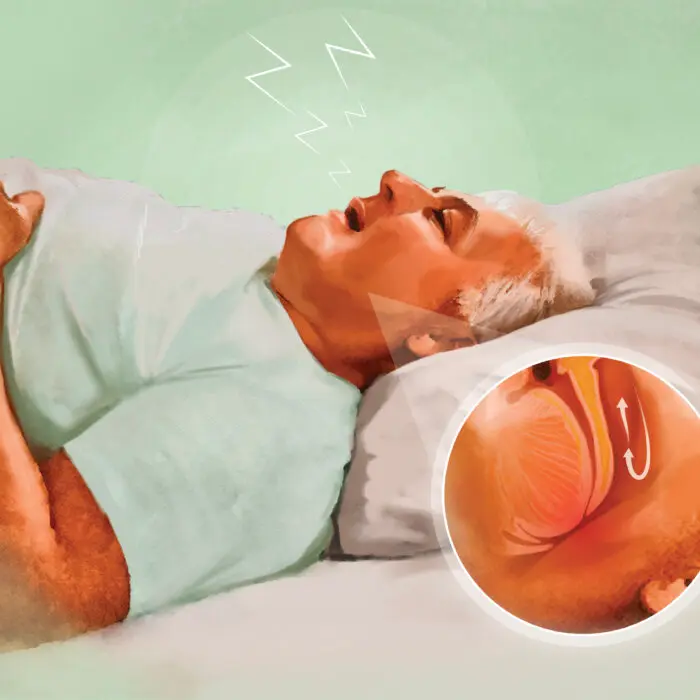

Rather than treating the psoriasis first, I focused on improving his nasal breathing and sleep quality through Chinese herbal medicine.
Within two weeks, his nasal passages began to clear. After about a month, his snoring decreased significantly, his sleep improved, and the tightness in his head and neck eased. With continued treatment and topical skin care, even the psoriasis that had troubled him for years gradually improved.
Although this is only one clinical case, it illustrates an important point: symptoms involving the skin, chronic fatigue, or persistent muscle tension may sometimes reflect the body’s reduced ability to recover because of long-term poor sleep.
Potential Health Risks of Snoring
Snoring does more than create noise. It may also indicate that the body is not getting enough oxygen, which can affect the health of the blood vessels and brain.
Oxygen Deprivation
The first risk associated with snoring is oxygen deprivation.
Nighttime is typically a period when the body repairs blood vessels, regulates immune function, and stabilizes the nervous system. However, repeated drops in oxygen levels during sleep can make it difficult for the body to fully rest and recover.
Damage to Blood Vessels
Snoring may also influence cardiovascular health in another way.
While current evidence shows only an association rather than proof of cause and effect, the findings suggest that chronic snoring deserves more attention than many people realize.
Risk of Brain Degeneration
Another major concern is the potential impact on brain health.
Natural Approaches to Reducing Snoring
Because snoring often reflects problems involving breathing mechanics, posture, muscle tone, or nasal obstruction, simply trying to block the sound rarely addresses the underlying issue.
From a traditional Chinese medicine perspective, successful treatment focuses on restoring normal breathing rather than merely suppressing snoring.
In my experience, three areas deserve particular attention.
1. Restore Muscle Tone in the Tongue and Throat
Many people with severe snoring also have obesity, weakened muscles, or insufficient physical stamina. When the muscles around the upper palate, base of the tongue, and throat lose elasticity, they may relax during sleep, making the airway more likely to collapse. As air passes through the narrowed airway, snoring sounds may occur.
Therefore, the first step in reducing snoring is to help restore the basic tone of the tongue and pharyngeal muscles, which helps prevent the tissues from collapsing backward during sleep.
Tongue Exercises
Simple tongue exercises can be incorporated into daily routines. Press the entire tongue firmly against the roof of the mouth, hold for 10 seconds, then relax. Repeat several times.
You can also place the tongue between the teeth and lips, close the mouth, and slowly rotate the tongue clockwise five to 10 times, then repeat in the opposite direction. These exercises can help train the muscles of the tongue, the upper palate, and the surrounding throat.
Astragalus and Tofu Soup
From a TCM perspective, people with qi deficiency often have weaker muscle support and reduced stamina. A simple soup prepared with astragalus, yam, poria, tofu, carrots, and mushrooms may help support energy and muscle function as part of a balanced diet. People with medical conditions or those who are pregnant should consult a healthcare professional before using herbal therapies.
2. Relax the Upper Cervical Spine
Snoring is not always caused solely by the airway. Modern lifestyles—especially prolonged computer work, smartphone use, forward-head posture, and sleeping with an overly high pillow—can create persistent tension around the upper neck.
Tight muscles near the base of the skull may influence breathing mechanics while also contributing to neck stiffness and a feeling of pressure in the head.
Simple movements and gentle massage can be performed as part of a daily routine to relax the upper cervical spine.
Upward Neck Stretch
Sit upright and gently tuck your chin. Imagine the top of the head being lifted upward by a string, while the shoulders naturally sink downward. Hold for several seconds, then relax. Repeat several times.
This movement may help lengthen the cervical spine and relieve the sense of compression caused by prolonged looking down.
Wind Pool Acupoint Massage
Use both thumbs to press on the Wind Pool (Feng Chi, GB20) acupoints, located below the hairline at the back of the head, beside the two large tendons.
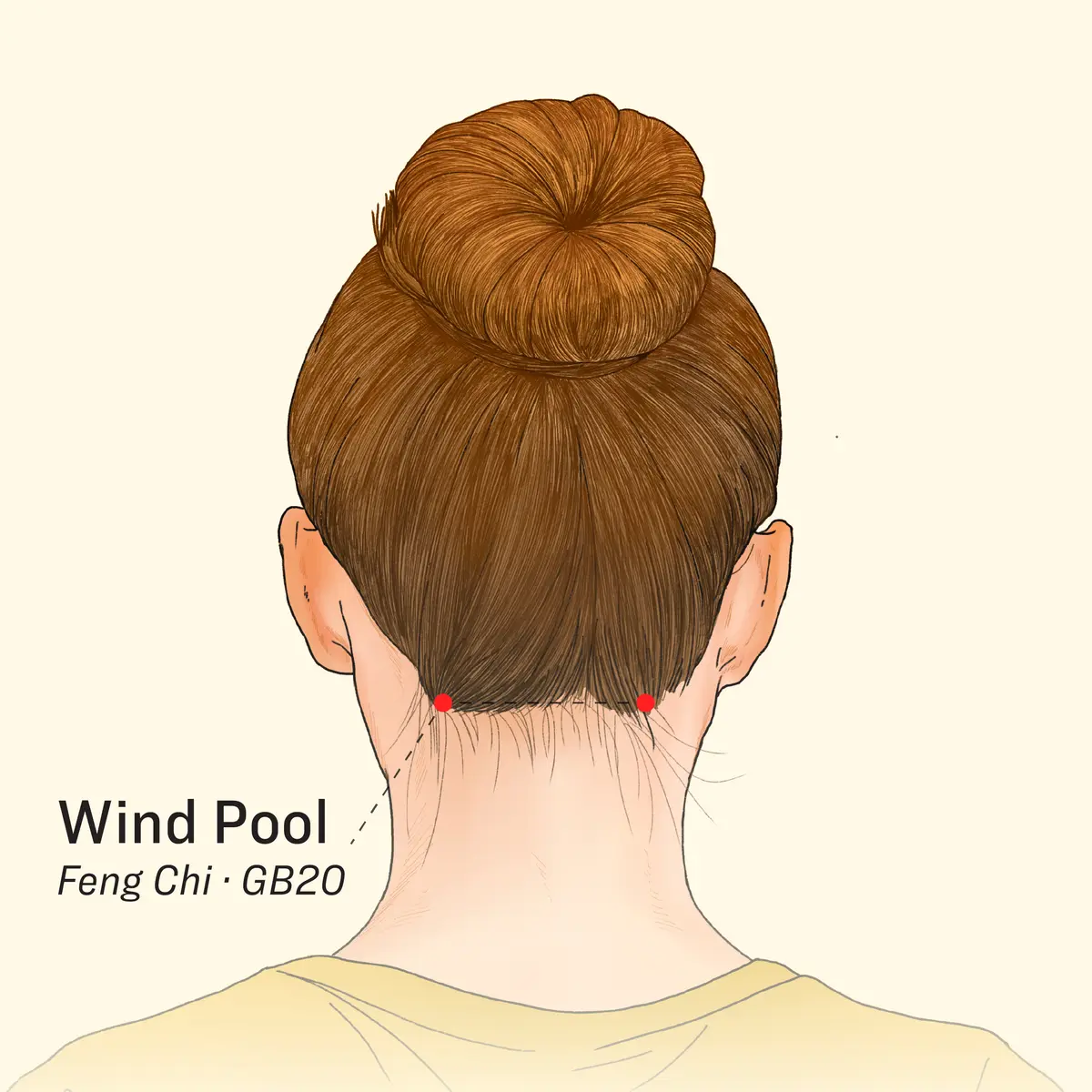
Location of the Wind Pool acupoint. The Epoch Times
Keep the thumbs in place, then slowly and gently move the head from side to side within a small, comfortable range of motion. Continue until the back of the neck gradually feels more relaxed.
People with dizziness, numbness in the hands, a history of cervical spine disorders, vertebral artery problems, or discomfort during the movement should first seek evaluation from a physician or qualified therapist. Do not forcefully twist your neck on your own.
3. Clear the Nasal Passages
The nose is the body’s natural airway. When chronic allergies, rhinitis, enlarged turbinates, or nasal polyps block airflow, many people unconsciously switch to mouth breathing during sleep, allowing the tongue to fall backward and making snoring worse.
From a TCM perspective, treatment focuses on improving nasal airflow while addressing the underlying imbalance contributing to chronic congestion. Because nasal obstruction often develops gradually, improvement usually requires time and continued management.
Simple self-care measures include massaging the Nose Passage (Bi Tong, EX-HN18) and Welcome Fragrance (Ying Xiang, LI20) acupoints.
Nose Passage Acupoint: Located above the nostril, near the junction between the nasal bone and nasal cartilage.
Welcome Fragrance Acupoint: Located beside the midpoint of the outer edge of the nostril, where it meets the nasolabial fold.
Use the fingertips to massage the acupoints on both sides for two to three minutes each time. Then, use the bent knuckle of the thumb to rub up and down along both sides of the nose until the nose feels slightly warm and the nasal passages feel more open.
A magnolia flower herbal sachet may also help temporarily relieve congestion. Persistent nasal obstruction, recurrent sinus infections, or nasal polyps should be evaluated by an ear, nose, and throat specialist.
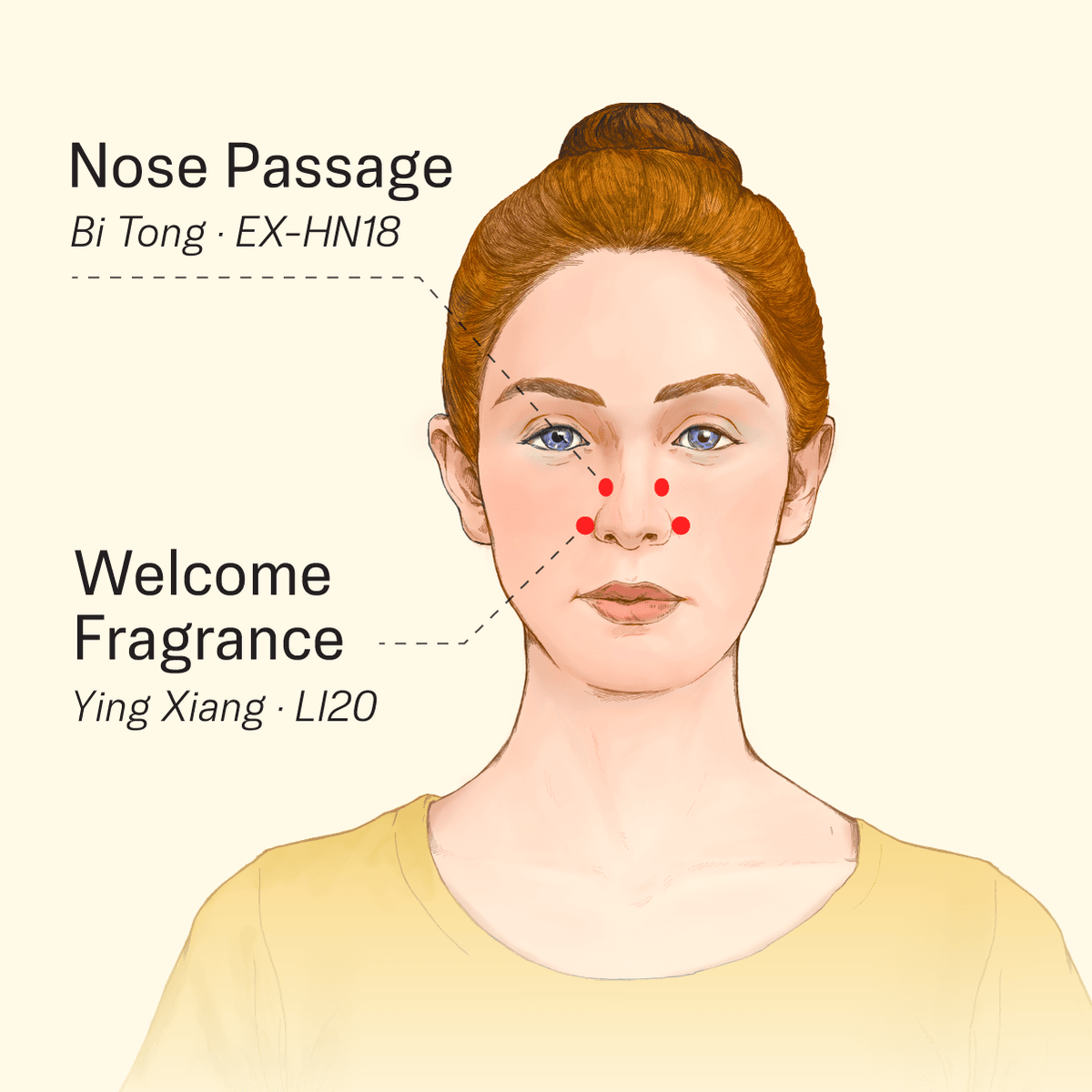
Location of the Nose Passage and Welcome Fragrance acupoints. The Epoch Times
Don’t Ignore Persistent Snoring
Snoring should never be dismissed as simply an inconvenience. Loud snoring, witnessed pauses in breathing, waking up gasping, excessive daytime sleepiness, or difficult-to-control high blood pressure may all be signs of obstructive sleep apnea and warrant medical evaluation.
Whether the underlying cause is weakened airway muscles, chronic neck tension, or nasal obstruction, addressing the problem early may improve not only quieter nights but also cardiovascular health, brain function, and the body’s ability to recover from chronic inflammation.