





Ask different research teams which supplement works best for knee osteoarthritis, and you may get very different answers. One points to Boswellia, another to eggshell membrane. Two of the most familiar joint supplements, glucosamine and chondroitin, often face disagreements between major medical guidelines.
What do these conflicting findings mean for the joint supplements on store shelves? Some may offer pain relief, but much of the evidence is low quality, and specific ingredients and formulations matter. Even the most promising supplements aren’t substitutes for exercise and weight management.
How Do You Know a Joint Supplement Is Working?
Joint supplements work in different ways. Glucosamine and chondroitin are natural components of cartilage and may help protect it from breaking down. Curcumin, found in turmeric, and Boswellia, a resin from the Boswellia tree, may help reduce inflammation, potentially easing pain and stiffness. However, supplements don’t always deliver the same benefits to everyone.
Osteoarthritis is more than simple wear and tear on cartilage, the smooth tissue that cushions the ends of the bones. It can also involve cartilage, bone, the joint lining, tendons, ligaments, and the meniscus, the cushioning pad between the thigh bone and shin bone.
Cartilage loss is the hallmark of osteoarthritis, but it is only part of what happens inside the joint, Dr. Arnold Silverberg, an orthopedic surgeon at Western Carolina Orthopaedic Specialists, told The Epoch Times. Osteoarthritis can also damage support structures such as the menisci and ligaments and change how the joint moves and lines up.
Related Stories

Given that complexity, most supplement trials don’t show that supplements can restore arthritic joints. Instead, they ask patients how they feel, measuring pain, stiffness, and physical function, often using a standard questionnaire called the Western Ontario and McMaster Universities Osteoarthritis Index, or WOMAC.
That means a supplement could help a knee hurt less or function better without rebuilding cartilage or reversing the disease. Silverberg said he is not aware of any supplements reliably shown to change the course of osteoarthritis. However, many trials do show improvements in pain, stiffness, and function.
Why the ‘Best’ Supplement Changes Study to Study
Much of the recent supplement research comes from network meta-analyses. This statistical method pools many trials and compares several treatments at once, including ones never tested head-to-head, by linking them through a shared comparison such as placebo. The results are useful, but their rankings depend on which trials and products are included.
The differences don’t necessarily mean one analysis is wrong. The studies differ in formulations, doses, patient groups, outcomes, and the number and quality of trials available for each supplement.
“Unfortunately, there is a paucity of high-level research in these topics,” Silverberg said. “Randomized, double-blind studies are the pinnacle of clinical research. These studies should be given the most credence.”
What the Evidence Says About Popular Joint Supplements
Some joint supplements show promise for relieving knee pain and stiffness, but the strength of the evidence varies considerably by ingredient and formulation.
Glucosamine and Chondroitin
The difference comes down to which studies each organization gives more weight. The ACR emphasizes stronger studies showing little benefit over placebo, while the AAOS sees potential benefits despite mixed results.
Turmeric and Curcumin
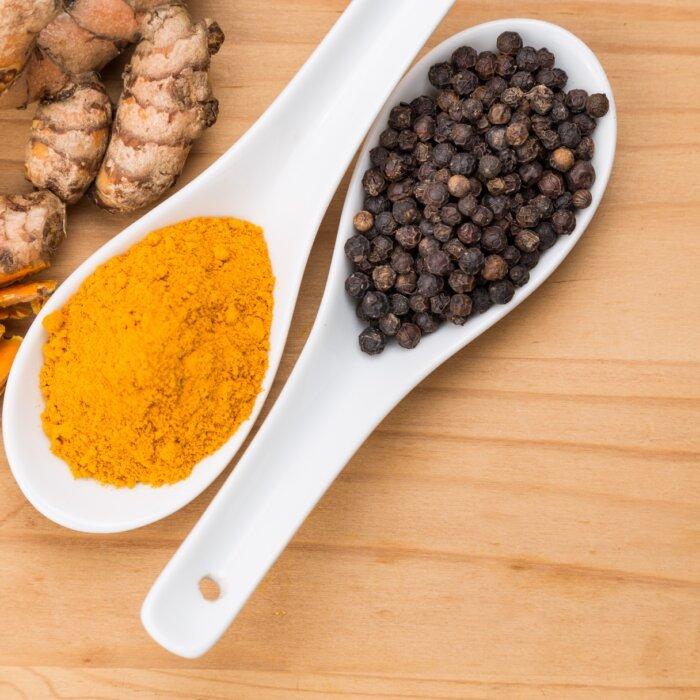
Turmeric has one of the largest research bases among popular joint supplements, but formulation matters.
The mix matters, because curcumin on its own is poorly absorbed. Positive results from a specialized formulation may not apply to a generic turmeric capsule, Lauren Manaker, a registered dietitian at Nutrition Now Counseling, told The Epoch Times. “A plain turmeric capsule and a study-grade curcumin formulation can produce very different results in the body, even though both say ‘turmeric’ on the front,” she said.
Boswellia and MSM
Collagen
Part of the variation may come from the fact that “collagen” can refer to very different products, Manaker said. Some studies use specific collagen peptides, a broken-down form of collagen often branded with specific molecular weights, doses, and treatment periods. Other products, such as undenatured type II collagen, are structurally different and studied separately.
“The honest takeaway is that collagen peptides show promise for joint comfort and function, but only when the type, dose, and duration actually reflect what the research used,” she said.
Omega-3s and Krill Oil
Both fish oil and krill oil contain omega-3 fatty acids, but they differ in how those fats are packaged and absorbed. Findings from studies on one cannot automatically be applied to the other. Manaker recommends checking the amount of EPA and DHA, the two key omega-3 fats, per serving rather than relying on the total amount of fish oil listed on the label.
How to Read a Supplement Label
The supplement aisle makes these products look more standardized than the research suggests. Two bottles labeled turmeric, collagen, Boswellia, or omega-3 may contain different forms, extracts, doses, or additional ingredients. “The name on the bottle rarely tells the full story,” Manaker said.
She recommends comparing the product with the formulation actually used in research, including the dose, extract standardization, delivery format, and raw material source. Third-party testing can also help evaluate product quality. USP and NSF are independent, non-profit organizations that help verify that products contain the ingredients and amounts listed on the label and check for harmful contaminants.
Joint supplements aren’t necessarily risk-free. Turmeric and curcumin supplements have been linked to rare cases of liver injury, particularly products designed to boost absorption. Other supplements may cause digestive upset or interact with medications. Manaker recommends reviewing supplements with a physician or pharmacist, especially for people taking prescription medications.
Manaker also suggests deciding in advance how to judge whether a supplement is helping. A simple baseline might include usual pain level, morning stiffness, walking tolerance, or how often pain relievers are needed.
For many joint supplements, she considers about 8 to 12 weeks a reasonable initial trial, depending on the product and research. “If nothing has budged after a fair trial at an appropriate dose, it’s perfectly sensible to stop rather than keep spending money out of habit,” she said.
Silverberg suggests asking yourself, “Would you do it again?” In other words, did you notice enough of an improvement that you’d choose to keep taking it?
Quick Recap of Things to Consider
To find a product that works for you:
-
Match the Product to the Research: Look for the specific ingredient, dose, and formulation studied
-
Look for Third-Party Testing: Note certifications such as USP or NSF.
-
Check With a Doctor or Pharmacist: They can review potential medication interactions and risks.
-
Set a Baseline and a Deadline: Track your usual pain, morning stiffness, walking tolerance, or need for pain relievers. Decide when you’ll reassess whether you feel a noticeable difference.
What Works Better Than Any Pill
Even if a supplement improves symptoms, it shouldn’t replace treatments with stronger evidence.
Exercise is a core part of osteoarthritis care as it reduces pain and stiffness while improving strength, mobility, and function. Strength training supports the muscles around the knee, and activities such as walking, cycling, and swimming can reduce stiffness and improve mobility. Silverberg emphasizes strengthening the quadriceps (front-of-thigh muscles) and hip muscles to support and offload the knee.
“For patients hoping to avoid joint replacement surgery, or increase the success of surgery, there is no better intervention than adopting a healthy lifestyle,” Silverberg said.
The newer research suggests that several supplements may offer modest symptom relief for certain people. It does not show that swallowing a capsule can rebuild damaged cartilage or reverse knee osteoarthritis.
Instead of asking which supplement is “best,” it may be more useful to ask three things: what symptom you’re trying to improve, how strong the evidence is for the exact formulation, and what you can realistically expect it to do.