





MELBOURNE, Australia—Four hundred years ago, the fictional Don Quixote saw giants when others saw windmills.
Today, amid a flood of “fake news,” online echo chambers, AI, and partisan media, people either side of the political spectrum can arrive at radically different conclusions about the same events.
Despite the span in centuries, Miguel de Cervantes’ seminal work remains just as relevant, and in Australia, two replicas of the original “Don Quixote” have been donated and handed over to the Instituto Cervantes centres.
The facsimiles will be displayed in Sydney and Melbourne at the Spanish cultural institutions and form the foundation of the group’s new library in Melbourne.
“It’s a treasure for us, it’s like a gift, because it’s the most important book in Spanish literature, and it’s very well known to the rest of the world,” said Director Germinal de Gracia, in an interview with The Epoch Times. Cervantes, born 1547, passed away in 1616—the same year as English playwright William Shakespeare.
De Gracia said in the digital age, the fascimiles were a “bridge” between modern and ancient times.
Related Stories
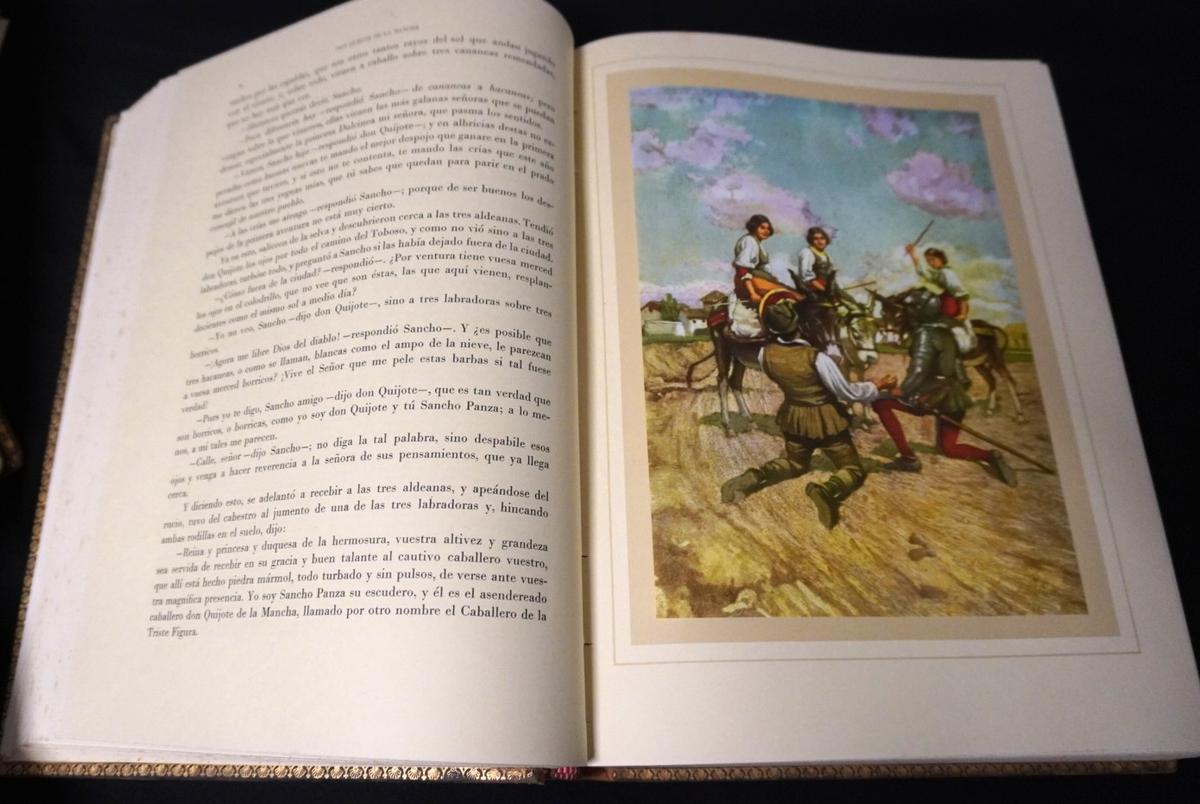
A replica of Miguel de Cervantes’ original “Don Quixote” published in two parts in 1605 and 1615, on display at the Instituto Cervantes in Melbourne, Australia on Aug. 13, 2026. Courtesy of Minh Anh
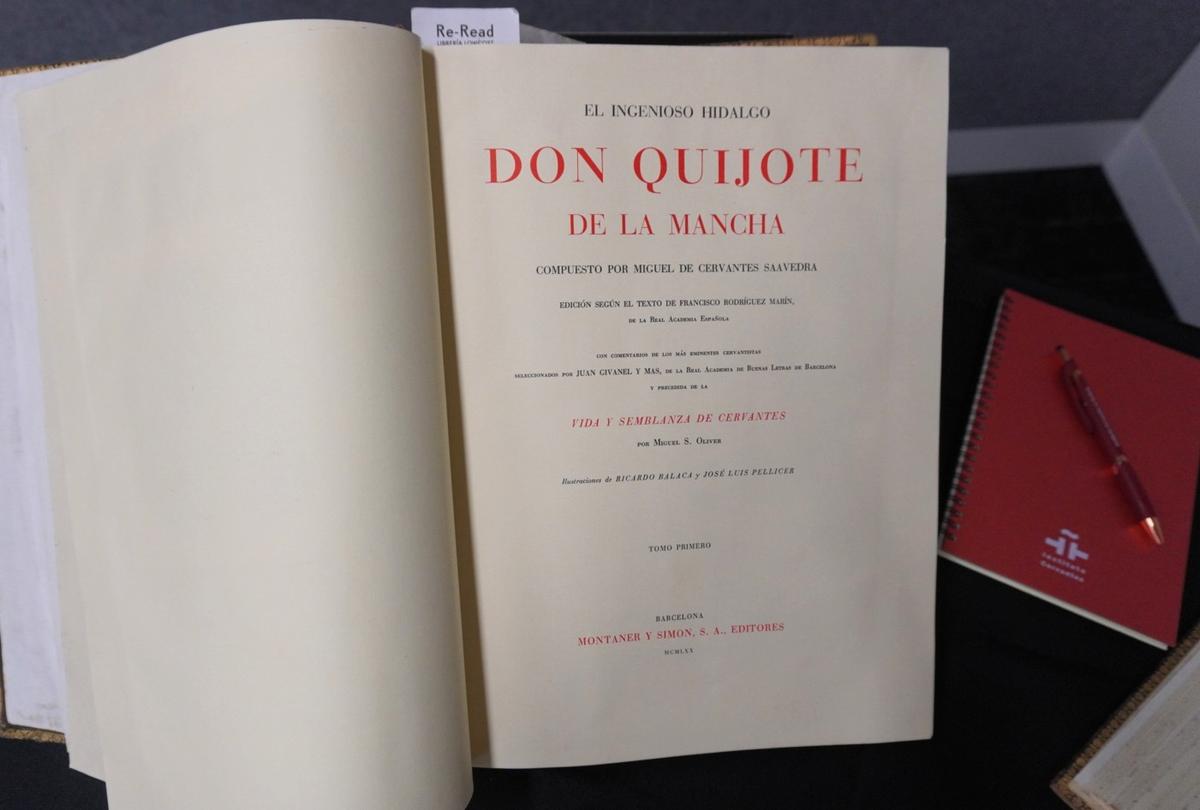
A replica of Miguel de Cervantes’ original “Don Quixote” published in two parts in 1605 and 1615, on display at the Instituto Cervantes in Melbourne, Australia on Aug. 13, 2026. Courtesy of Minh Anh
“There is a phrase that encapsulates what Cervantes and the book is about: ‘Freedom, Sancho, is one of the most precious gifts that heaven has bestowed upon men,’” said de Gracia.
It’s one of many major themes in the novel, while another espouses the risks of indulging too much in fantasy and becoming delusional, contrasted with those who are too caught up in the material world and become cynical.
Books Are Key to Our Identity: Academic
One of the donors, Julie Macphee, a retired teacher said she and her husband, Ian, had the copies at home and wanted to find a home for it.
“We wanted to have a home where they’d be appreciated, and for many years we didn’t know what to do with them,” she told The Epoch Times.
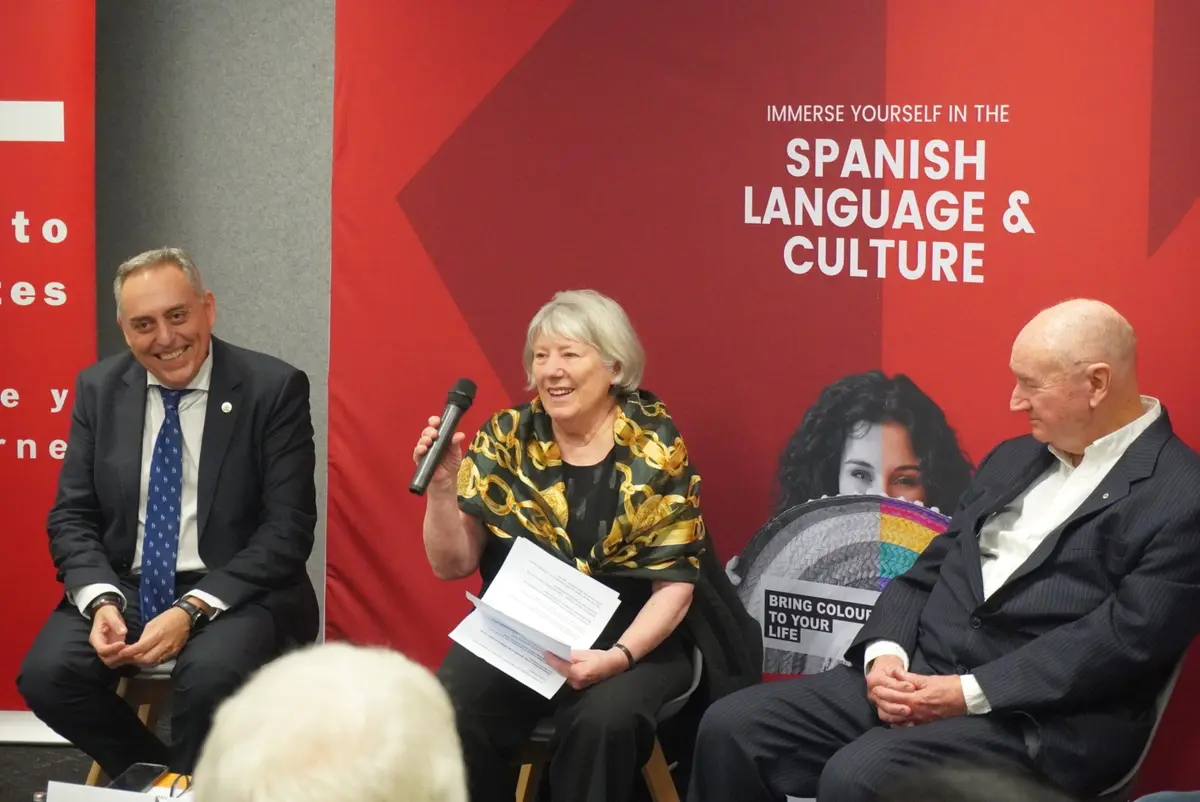
Director Germinal de Gracia (L) of the Instituto Cervantes, alongside donors Julie and Ian McPhee, speaking at the handover of replicas of Miguel de Cervantes’ original “Don Quixote” published in two parts in 1605 and 1615, at the Instituto Cervantes in Melbourne, Australia on Aug. 13, 2026. Courtesy of Minh Anh
Jason Foster, a lecturer at the Royal Melbourne Institute of Technology said physical copies were important in the age of artificial intelligence.
“A lot of AI companies are using rare books and destroying them and loading them into their AI,” he said, Foster’s thesis is on Latin American Spanish conquest films.
“But why that’s so scary is that books are a nation’s heritage.
“Books, like journalists, describe society to itself … People base what they see themselves today as an identity, in their past. And books like this describe that past.”
Foster also pondered whether younger generations who grew up in the digital world considered the implications of a physical media disappearing.
“What happens if there’s no electricity?” he said.
“How do we understand what came before us if there’s no digital world?
“So this is why books like this are so important, because it’s a way of remembering the past.”