





As people move through midlife and into older age, many notice an unwelcome change: their arms and legs seem thinner, while their waistline expands.
Age-related muscle loss, changes in fat distribution, and reduced physical activity all contribute to these changes. An expanding waistline may be a concern beyond appearance, especially when it involves visceral fat—which surrounds vital organs such as the liver, pancreas, and intestines—and can affect metabolic health.
In my practice, I often see patients with a soft, protruding abdomen who tire easily, feel heavy, and experience weakness in their arms and legs. Some have elevated blood glucose or triglycerides, or fatty liver disease.
Traditional Chinese medicine (TCM) offers a framework for understanding this combination of symptoms—and an approach that begins with everyday eating and movement habits.
Why the Belly Gets Bigger With Age
TCM often associates this pattern—relatively thin limbs and a soft, protruding abdomen—with what we call “phlegm-dampness.”
Related Stories

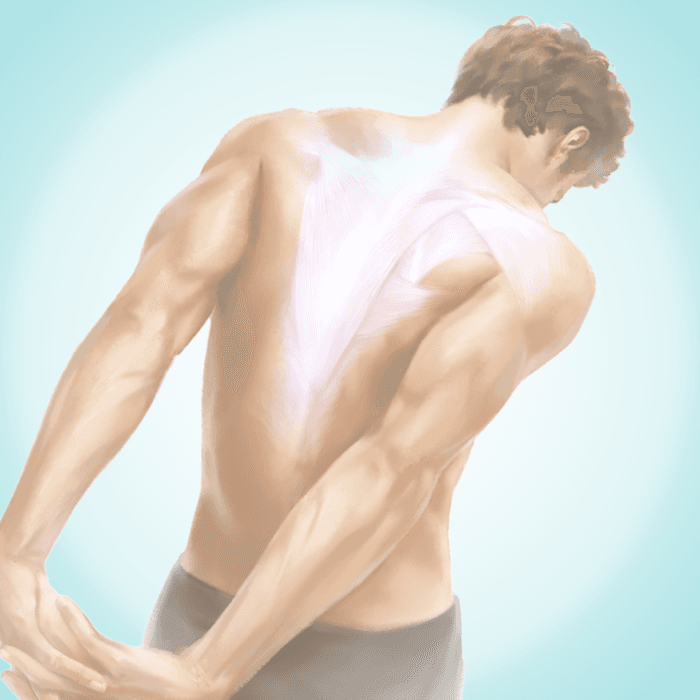
Phlegm-dampness refers to pathological substances that form when fluids and nutrients are not properly transported and transformed, causing them to accumulate in the body.
In TCM, the “spleen” does not refer solely to the anatomical organ. It represents a functional system associated with digestion, nutrient absorption, and fluid retention.
As we age, spleen and stomach function gradually weaken, especially if people overeat and are inactive. Fluids and metabolic byproducts may then accumulate, contributing to phlegm-dampness.
Addressing this pattern involves more than controlling body weight—you also need to reduce the burden on the spleen and stomach and increase physical activity.
If your soft, protruding belly concerns you, here are some lifestyle changes and therapies that may help.
Dietary Changes
Start by adjusting when you eat certain foods and adding foods that support the spleen and stomach.
Eat Fruit at the Right Time and in Moderation
Many patients tell me they rarely eat sweets. They eat fruit every night because they consider it healthy and assume that eating more is harmless.
Fruit can certainly be part of a healthy diet, but timing and portion size matter.
Fruit contains natural sugars. Eating large amounts at night, especially with little physical activity afterward, leaves less opportunity for the body to expend that energy.
Eating large amounts of sweet, raw, or cold foods at night is seen to place additional strain on the spleen and stomach, leading to the retention of cold-dampness and phlegm-dampness.
Chinese medicine holds that for a person to be healthy, their body must have a balance of heat—not too hot or too cold—and a balance of dryness and dampness. When the body has too much cold or damp energy, it can cause bloating, a feeling of sluggishness, poor appetite, and mental fog.
I generally recommend eating a moderate amount of fruit after lunch rather than late at night. Also, avoid turning fruit into juice or replacing dinner with a large plate of fruit.
Sishen Soup as a Staple Food
Traditional sishen soup is made primarily with Chinese yam, gordon euryale seed, lotus seed, and poria cocos, with Coix seed often included as an additional ingredient.
In TCM, these ingredients are often used to strengthen the spleen and transform dampness.
I once treated a patient whose fasting blood glucose was consistently around 160 mg/dL and whose hemoglobin A1c (a blood test that measures blood sugar over the past two to three months) was 7.5 percent.
I advised the patient to replace the white rice at one meal each day with sishen soup, served alongside vegetables and meat. After one week, the patient’s fasting blood glucose dropped to around 120 to 130 mg/dL.
However, these findings are based primarily on animal studies and may not reflect the effects of eating sishen soup in people.
Exercise
In addition to dietary changes, regular physical activity can help support metabolism.
Some movements require no special equipment and can be practiced at home or even while seated.
Seated Heel Raises
For older adults, people with knee problems, or those who spend long hours sitting at a desk, seated heel raises can support metabolism by activating the soleus, a deep calf muscle.
The soleus has an interesting relationship with blood sugar, and doing this simple exercise, sometimes called soleus push-ups, can help lower blood sugar after meals.
If you can do heel raises while standing, they will engage more of your body.
You can also combine heel raises with squats, but do so with caution, as this is more demanding and inadequate core control or knee and ankle stability can increase your risk of injury.
Steps
-
Sit on a sturdy chair with your torso relaxed and upright.
-
Place both feet flat on the floor, with knees bent at 90 degrees.
-
Keep the balls of your feet on the floor and slowly raise your heels.
-
Pause briefly at the top, then slowly lower your heels.
-
Repeat the movement.
Knee Raises With Downward Press
Steps
-
Stand with your feet shoulder-width apart. Bring your hands together in front of your abdomen. Loosely overlap the fingers and thumbs to form a loose triangle with palms facing down, then raise your hands over your head.
-
Lift your right knee while lowering your hands until they lightly touch the knee.
-
Raise your hands again while lowering the right foot, then repeat the exercise with the left knee.
-
Continue alternating sides. Do around 100 repetitions.
Keep your upper body upright and use your abdominal muscles to drive the knee upward. You should feel contractions in your lower abdomen.
Knee Raise With Side Bend
Steps
-
Stand with your feet shoulder-width apart. Rest your hands lightly behind your head, with your elbows out to the sides.
-
Lift your right knee to the right while bending your upper body down, and bring your right elbow toward your right knee.
-
Return to standing, then lift your left knee and bring your left elbow toward it. Repeat alternating sides.
Do about 100 repetitions.
Use the muscles along the side of your abdomen to drive the movement. Do not force your elbow to touch your knee or pull on your head or neck with your hands.
People with poor balance can hold the back of a sturdy chair with one hand and perform the movement one side at a time.
Chair-Supported Side Knee Raises
Steps
-
Hold the back of a sturdy chair with one hand. Rest the other hand lightly behind your head, with the elbow out to the side.
-
Lift the outer knee out to the side while bending your upper body toward the same side, and bring the elbow toward the knee.
-
Return to standing. Complete the repetitions on one side, then switch hands and repeat on the other side.
This exercise engages both the leg and abdominal muscles.
For older adults who are prone to constipation, doing these exercises regularly may also help promote bowel movements.
TCM Therapy: Acupressure
In addition to adjusting diet and exercise, you can massage the following acupoints daily to help strengthen the spleen and transform dampness.
Celestial Pivot (Tian Shu, ST25)
Tian Shu is located about three finger-widths to either side of the navel.
It is commonly used in TCM to regulate gastrointestinal function and may help relieve symptoms such as abdominal bloating, constipation, and diarrhea.
Middle Epigastrium (Zhong Wan, CV12)
Zhong Wan is located about six finger-widths above the navel, midway along the line between the navel and the lower end of the breastbone.
It is an important point commonly used in TCM to regulate the spleen and stomach and address digestive discomfort.
Gate of Origin (Guan Yuan, CV4)
Guan Yuan is located about four finger-widths below the navel.
People whose lower abdomen tends to feel cold or soft, or who are generally sensitive to cold and low in energy, can gently massage the acupoint or apply a warm compress to the area.
Girdling Vessel (Dai Mai, GB26)
Dai Mai is located on the side of the waist, approximately level with the navel.
In TCM, massaging the area around this acupoint is believed to help regulate the flow of qi (vital energy) and blood through the waist and abdomen.

The Epoch Times
Leg Three Miles (Zu San Li, ST36)
Zu San Li is located on the outer side of the lower leg, about four finger-widths below the depression on the outer side of the knee.
It is a commonly used acupoint in TCM to regulate the spleen and stomach and tonify qi and blood.
Abundant Bulge (Feng Long, ST40)
Feng Long is located about midway between the depression on the outer side of the knee and the tip of the outer ankle, approximately one finger-width outside the crest of the shinbone, in the thickest part of the muscle.
It is commonly used in TCM to transform phlegm and dispel dampness.
People who frequently feel heavy and have more pronounced signs of phlegm-dampness can massage this acupoint regularly.

The Epoch Times
When massaging these acupoints, press with the pad of a finger until you feel mild soreness or distention. Massage each acupoint for about 30 seconds to one minute.
Avoid pressing firmly on abdominal acupoints immediately after a large meal.
Note: Pregnant women, people who have recently undergone abdominal surgery, and those with unexplained abdominal pain or an abdominal mass should consult a physician before performing acupressure.
A smaller waistline begins with consistent daily habits. In my practice, dietary therapies and acupressure are most useful when they accompany balanced meals in moderate portions and regular movement. The aim is to support better energy, digestion, strength, and long-term health.
These TCM approaches are general wellness information; people with chronic conditions or taking glucose-lowering medication should seek individualized guidance before changing their diet or exercise routine.