





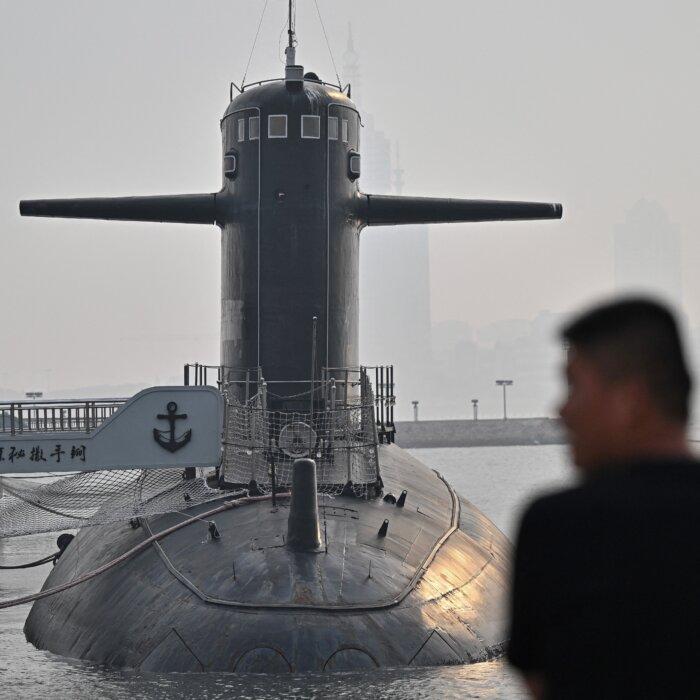
Foreign Affairs Minister Penny Wong has raised Australia’s concerns with her Chinese counterpart, Wang Yi, over Beijing’s recent intercontinental missile test in the South Pacific.
The two ministers met on the sidelines of the ASEAN Summit in Manila, the Philippines, on July 21.
“You speak about the importance of mutual understanding. I agree, and I expect we will discuss our concerns … including around peace and stability in our region, safe and professional military conduct, and the importance of transparency and reassurance of intent,” Wong said in her opening remarks, according to AAP.
Both Wong and Yi also discussed the importance of peace and stability in the Indo-Pacific.
“You’ve often heard me say that we will cooperate where we can and disagree where we must, and we want to continue to engage because we believe that is in our national interest,” Wong said.
Related Stories
Solomon Islands Prime Minister Matthew Wale, who was standing besides Albanese in Honiara on July 7, said the test was “not something a friend does.”
Albanese said a strong statement would be issued by the Pacific Islands Forum, but disagreements among members over the wording have delayed the group’s response.
A foreign ministers’ meeting of the forum is expected to be held in August, where the issue is likely to be discussed.
Wong’s Philippines Visit to Improve Australian Ties
Wong has travelled to Manila, the Philippines, to attend the ASEAN-Australia Foreign Ministers’ Meeting, the East Asia Summit Foreign Ministers’ Meeting, and the ASEAN Regional Forum, saying the trip would strengthen Australia’s ties with the region.
“My meetings with regional and global counterparts will be an opportunity to advance Australia’s interests and continue work on shared challenges, including energy security, supply chain resilience and long-term economic prosperity.”
In an opinion piece published in Philippine media on July 21 that took aim at Beijing, Rubio said South-east Asian countries are confronting “new and coercive threats,” and that the United States is committed to upholding freedom of navigation.
“That freedom is by no means guaranteed. If those waters fall under the control of a power willing to use commerce as a geopolitical weapon, both the United States and the ASEAN states would face dire new threats to their sovereignty, security, and economic futures,” Rubio wrote.
The Association of South East Asian Nations (ASEAN) includes 11 member states: Brunei, Cambodia, Indonesia, Laos, Malaysia, Myanmar, the Philippines, Singapore, Thailand, Vietnam, and East Timor.
While Australia is not a member, it works closely with ASEAN on economic and trade issues. Australia became ASEAN’s first Dialogue Partner in 1974, and established a Comprehensive Strategic Partnership with the association in 2021.