





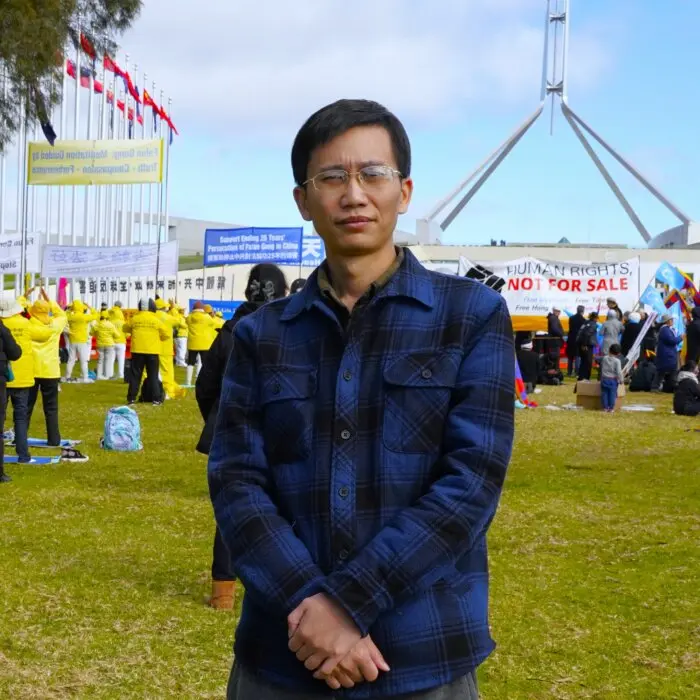
Falun Dafa practitioners from across Australia take part in a parade in Melbourne, Australia, on Oct. 23, 2026. Tien Nguyen/The Epoch Times
The Australian Federal Police (AFP) says it cannot act when local residents are threatened to leave the country by foreign regimes because they don’t have the power to do so, according to Greens leader David Shoebridge.
The senator made the comment while questioning the Department of Home Affairs on how it handles “transnational repression,” during a Senate Estimates hearing on Oct. 27.

A man attacks a Falun Gong practitioner filming him as he forcefully removes their banners on a public sidewalk outside the Chinese Consulate in Toronto on Sept. 22, 2026. Screenshot/Handout
Ciara Spencer, deputy secretary of law enforcement and domestic security, told the Legal and Constitutional Affairs Committee that people who experience transnational repression are supposed to first go to the AFP or local police, and are then referred to general mental health and welfare services.
Shoebridge asked whether Home Affairs funds services for victims, Spencer said, “No, senator, we don’t.”
Related Stories
He further said that each time he referred cases where individuals were threatened to leave the country due to their political views, the AFP told him it could not act because the threats were made in another country.
“When they report, nothing happens,” Shoebridge said, adding that this was probably one of the reasons the problem was underreported.

David Shoebridge with former leader Larissa Waters and South Australian Senator Sarah Hanson-Young in background. Hilary Wardhaugh/Getty Images
Deputy Secretary Spencer agreed that people were reluctant to come forward, particularly out of fear for family members overseas.
She said the Department offered only general online and personal security advice through a community website launched late last year, and did not help individuals with their digital security.
New Offence Still in the Works
Spencer said new offences were a matter for the Attorney-General’s Department, but Home Affairs was “developing policy and looking at options.”
Home Affairs Secretary Stephanie Foster stepped in saying the Attorney-General’s Department was considering the issue, telling the committee she wanted “to reassure you that that is under consideration.”
Spencer also said Home Affairs’ foreign interference team had met community representatives 14 times this year, as well as 10 non-government and support organisations, seven community groups, nine service providers, and one faith-based peak body.
Foster told Shoebridge he had raised “really helpful, practical suggestions” and she would look to cooperate further with the AFP, the Attorney-General’s Department, and the state governments.